Many travellers know the Bishnoi as the people who protect blackbuck and trees, yet few understand the beliefs behind that kindness. A Bishnoi village tour in Jodhpur is the best way to learn them, because you meet families, hear the stories, and see daily life as it is actually lived. This guide explains who the Bishnoi are, what they believe, how an ordinary day unfolds in their villages, and how to visit with respect. Read on to turn a simple outing into a meaningful cultural experience.
Bishnoi Village Safari in Jodhpur: Meet the People Behind the Tradition
The community lives in villages around Jodhpur and across the wider Thar region. On a Bishnoi village safari in Jodhpur, you quickly notice how calm the countryside feels, and how closely people live alongside trees, animals, and open land.
Origins of the Faith
The Bishnoi faith was founded in 1485 by Guru Jambheshwar, also known as Jambhoji, who taught his followers to live simply and protect all living things. He gave them 29 rules for daily life, and the name Bishnoi is commonly linked to the words for twenty and nine. Over five centuries, these teachings have shaped the villages you see today. Many families can recall the founder’s story as easily as their own family history, and they share it with visitors who ask with genuine interest.
The 29 Principles in Daily Life
The principles cover compassion for animals, protection of green trees, clean water, simple living, honesty, and a vegetarian diet. They are not distant ideas written in a book. They guide how families plant, cook, farm, and raise their children. Villagers do not harm wildlife, which is why blackbuck and chinkara graze so close to homes, and why many visitors leave surprised at how peaceful the land feels.
The Story of Khejarli
In 1730, a village woman named Amrita Devi refused to let royal workers cut the sacred khejri trees. She embraced a tree, and many villagers followed her, with the commonly cited toll being 363 lives. The event is remembered as one of the earliest acts of tree protection in India, and it inspired later movements to save forests. A guide will usually narrate this story at the memorial, and it often becomes the most moving moment of the day.
Care for Trees and Water
The khejri tree is often called the lifeline of the desert. It gives shade, fodder for animals, and pods that villagers cook as a local delicacy. Bishnoi families plant, guard, and respect these trees, and they keep water points and grain feeders for birds near their homes. Small gestures like these explain why the landscape looks green in places where you might expect only dust. Travellers who notice them begin to see the villages as one connected, caring system.
Compassion for Animals
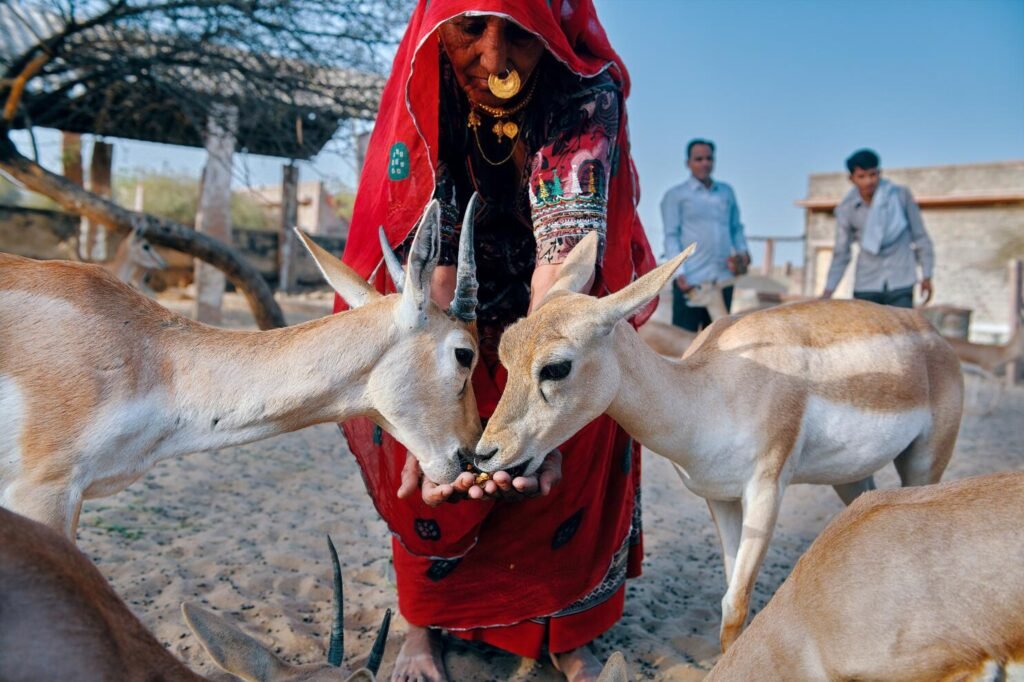
Few stories travel as widely as the tale of village women nursing orphaned fawns alongside their own children. Whether you hear it from a guide or a host, it captures the spirit of the community. Animals are treated as family members, not as property or entertainment. That attitude shapes everything from farming to festivals, and it is the reason travellers are asked to keep a gentle distance and a quiet voice.
Guda Bishnoi Village Safari in Jodhpur: Everyday Life and Crafts
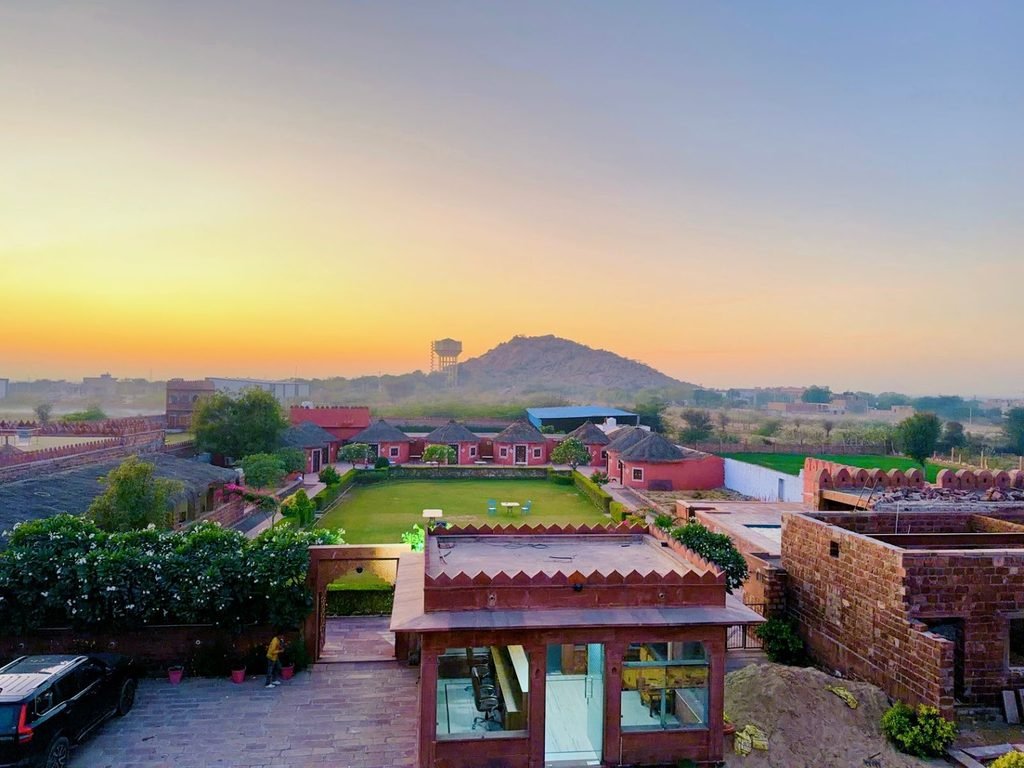
A Guda Bishnoi village safari in Jodhpur is usually the heart of any outing. The village sits roughly 22 to 25 km from the city, and it combines home visits, lake views, and craft stops in one easy route. Guides at Bishnoi Village Safari introduce you to host families so that every conversation feels natural rather than staged.
A Morning in the Village
Mornings begin early. Women prepare tea and bread over wood fires, children walk to school, and shepherds lead goats, sheep, and camels to graze. Homes often have swept courtyards and simple mud walls that keep rooms cool in summer. Women are often seen in bright orange and red clothing with traditional jewellery, while men usually wear white. Sitting with a family for tea, even briefly, teaches you more than any brochure can.
Crafts You Can Watch
The villages around Jodhpur are known for handmade work. At Salawas, weavers produce flat woven rugs called dhurries on wooden looms. Potters shape clay on spinning wheels, and block printers stamp patterns onto cloth with carved wooden blocks. Many artisans let guests try the craft, and buying directly from them puts money straight into the village economy.
Food and Hospitality
Meals are vegetarian and freshly made, usually with millet bread, lentils, seasonal vegetables, and curd. Hosts serve food with great care, and guests are treated as honoured visitors. Accepting tea or a meal with a smile is a quiet way to say thank you, and it often opens the door to longer conversations about village life. Do not worry about language, because a smile, a few gestures, and your guide’s translation are usually enough to connect.
Schools and Changing Times
Village life is not frozen in the past. Children attend school, young people use mobile phones, and many families mix farming with other work. Some outings include a short stop at a village school, where teachers and students are happy to talk. The result is a living culture that holds on to its values while adapting to the modern world. Watching that balance in action is one of the most thoughtful parts of the visit.
Visiting Respectfully: Customs to Follow in Rural Rajasthan
The Bishnoi welcome visitors warmly, and a few simple habits keep that welcome open for everyone. Travellers who follow local customs in rural Rajasthan usually enjoy deeper conversations and warmer smiles.
Simple Etiquette to Remember
Keep these points in mind during your visit:
- Ask permission before photographing people, especially women and children
- Dress modestly in light cotton clothes that cover shoulders and knees
- Remove your shoes when invited into a home or a prayer space
- Carry your waste back with you and avoid plastic litter
- Never feed, chase, or crowd the animals
- Carry small notes for crafts and snacks, since change is limited
Best Time to Go
Planning a Bishnoi village tour in Jodhpur between October and March gives you pleasant weather and the lively winter countryside. Mornings and late afternoons are cooler and more photogenic, and summer visits are best kept to early starts because the sun turns harsh after 10:00 AM. After a good monsoon, the fields turn green and the whole landscape looks refreshed.
Plan and Reserve Early
Village hosts, drivers, and guides all need notice, so reserving early keeps your Bishnoi village tour in Jodhpur smooth. Our team at Bishnoi Village Safari can suggest a route, a slot, and a group size that suits you. Read why reserving in advance pays off, how payment works, and which animals and birds you may spot near Jodhpur before you confirm. If you want to stay longer, our guides to a village homestay and to experiencing the countryside and wildlife up close can help.
What to Expect on the Day
Most outings begin with a hotel pickup in Jodhpur and last about four to six hours. You usually visit the lake, a village hamlet, the Khejarli memorial, and one or two craft stops, often followed by a simple meal with a host family. Wear comfortable shoes, carry water and a hat, and keep your phone charged for photographs. A relaxed mindset helps most of all, because the best moments tend to happen between the planned stops. Starting early also gives you cooler air and softer light.
Frequently Asked Questions
Who are the Bishnoi people?
They are followers of Guru Jambheshwar who follow 29 principles centred on protecting animals and trees.
What is Khejarli famous for?
It is remembered for the 1730 sacrifice of villagers, led by Amrita Devi, to protect khejri trees.
How long does a village visit take?
A typical outing takes about four to six hours, including pickup and drop-off in Jodhpur.
What should I wear to the villages?
Wear light, modest cotton clothes, comfortable shoes, and a hat for sun protection.
Can I take photographs?
Yes, you can photograph landscapes and animals, but always ask permission before photographing people.
Conclusion
The Bishnoi teach a simple lesson, which is that people can live well by caring for the land around them. Meeting them in their own villages, listening to their stories, and sharing a cup of tea makes that lesson real. If you are ready to experience it, contact Bishnoi Village Safari and plan your visit today. Go with an open mind, listen more than you speak, and you will return home with stories worth retelling.