Rajasthan tourism is shifting away from crowded forts and palace queues, and more travelers are asking a simple question: where can I see how people in the desert actually live? That is exactly why the Bishnoi Village Safari in Jodhpur keeps showing up on 2026 travel lists. It is a half-day jeep tour through shepherd hamlets, weaver colonies, and potter settlements just outside the city, guided by locals who grew up in these villages.
If you are weighing whether to add this to your Jodhpur itinerary, here is what makes it worth the detour, straight from the team at Bishnoi Village Safari.
What Makes This an Authentic Rajasthan Village Tour?
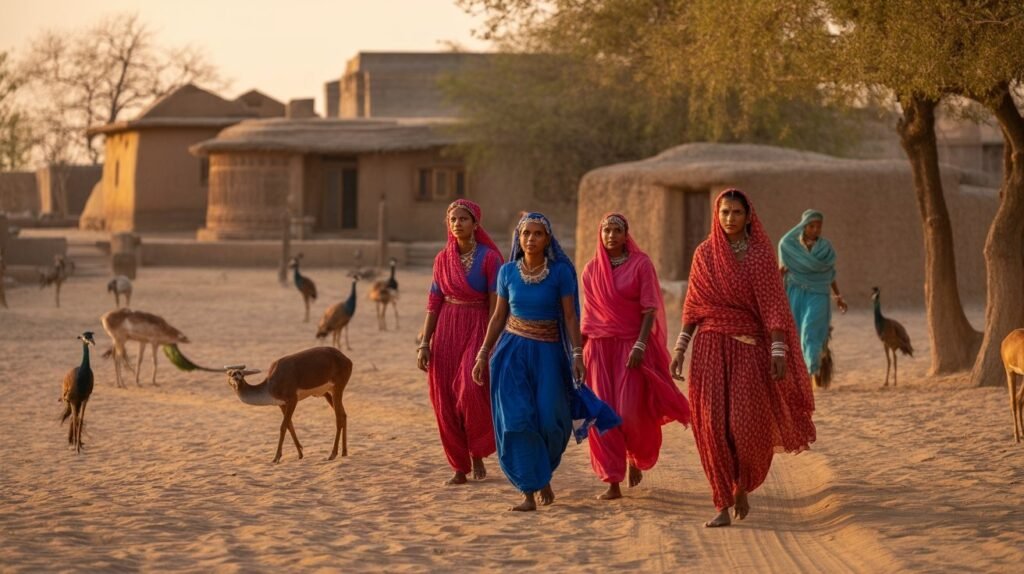
Most travelers researching the Bishnoi Village Safari in Jodhpur want to know one thing: is it staged for tourists, or is it real? The honest answer is that this route was a working rural circuit long before it became a tour. An authentic Rajasthan village tour does not follow a script, it follows the villages themselves, stopping wherever there is something genuine happening, whether that is a shepherd bringing goats in from grazing or a family repairing a loom. You are riding in an open jeep with a local guide, not a bus full of forty strangers, which keeps the pace unhurried and the interactions real. That difference, more than anything else, is what separates an authentic Rajasthan village tour from a typical sightseeing stop.
Planning an Overnight Stay
If a half-day safari leaves you wanting more, extending the trip into an overnight stay is worth considering. Our earlier guide to the homestay experience at Bishnoi Village Safari covers what a night in the village actually looks like, from the food to the quiet after the jeeps head back to town.
Why the Jeep Format Matters?
The choice of an open jeep over a coach is not just a comfort decision, it shapes the whole experience. Jeeps can pull over the moment a guide spots a blackbuck herd or a family starting a craft demonstration, something a larger vehicle simply cannot do on narrow village lanes. Groups typically stay small enough that everyone can ask questions directly, rather than straining to hear a guide over a microphone at the front of a bus. For travelers who have done a few group tours in India already, this format alone is usually the biggest difference they notice.
Getting to Know Bishnoi Tribe Culture
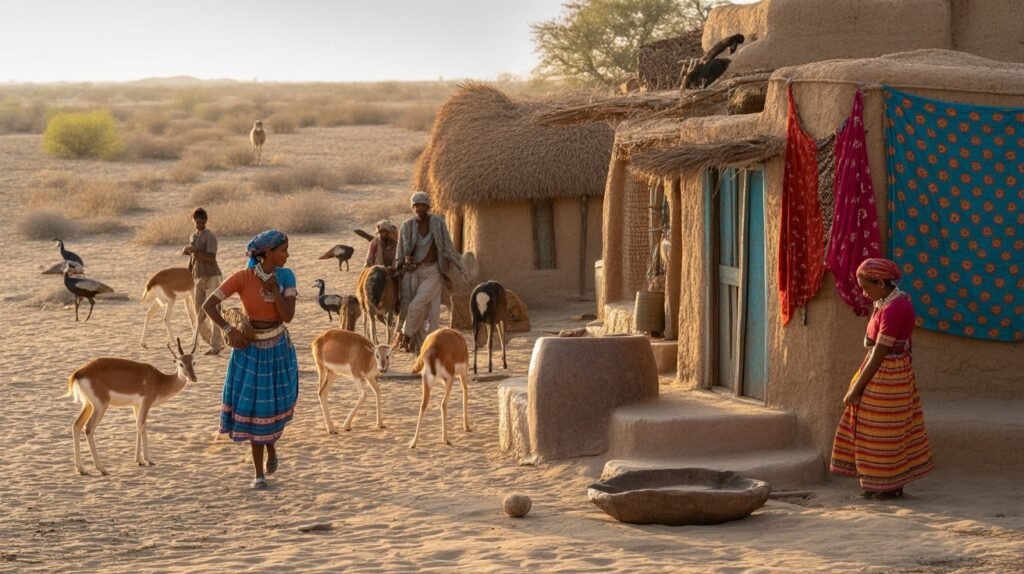
Understanding Bishnoi tribal culture is central to why this safari feels different from a standard desert tour. The Bishnoi community follows twenty-nine core principles set out around five hundred years ago by their spiritual leader, Guru Jambheshwar, many of which focus on protecting trees, water, and wildlife. That is why blackbucks and chinkaras wander close to homes without fear, and why cutting a green tree is still treated as a serious offense within these villages. Guides walk you through this history at an actual Bishnoi household, not from a plaque or a brochure, so Bishnoi tribal culture comes across as something lived, not displayed.
Guru Jambheshwar and the 29 Principles
Guru Jambheshwar founded the Bishnoi faith in the late fifteenth century, laying down twenty-nine principles that cover everything from daily hygiene to strict wildlife protection. Several rules ban the felling of green trees and the killing of animals outright, centuries before conservation became a global movement. Guides typically share a few of these principles during the safari, along with the story of the Khejarli massacre, where hundreds of Bishnois died protecting trees from being cut down.
A Conversation, Not a Performance
It is worth repeating that none of this is arranged as a show. Families continue their normal routines while guides translate and add context, so questions about food, farming, or faith get honest, unrehearsed answers. Some visitors are surprised by how willing Bishnoi families are to talk about the Khejarli sacrifice or their views on modern conservation, given how personal that history still is. It is this openness, more than any single stop on the route, that tends to stay with travelers long after the trip ends.
A Stop at the Weaver Village in Jodhpur
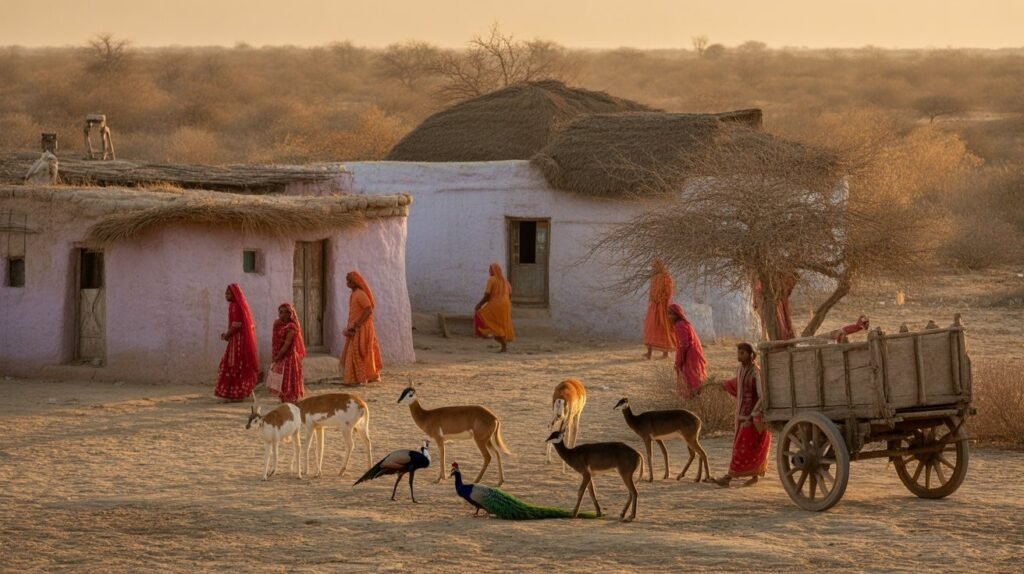
No visit is complete without stopping at Salawas, the weaver village in Jodhpur best known for handmade durries. Watching a family work a traditional loom, thread by thread, gives you a much better sense of the effort behind these rugs than any showroom display could. Most tours also let you buy directly from the weavers at Pukh Raj Durry Udhyog, cutting out the middleman entirely. Visiting the weaver village in Jodhpur on this route is usually paired with a stop at a block-printing workshop in Kankani, so textile lovers get two crafts in one afternoon.
Other Village Stops Worth Your Time
- Shepherd’s Village: herding families with goats, sheep, and camels
- Guda Village: Guda Lake and resident blackbuck herds
- Kankani: centuries-old hand block printing on cotton
- Salawas: handloom durrie weaving at Pukh Raj Durry Udhyog
The Potter Village in Jodhpur
The final art and craft tour is usually the potter village in Jodhpur, where families still shape clay on hand-turned wheels the way their grandparents did. You can watch the entire process, from raw clay to a finished pot drying in the sun, and most potters are happy to let visitors try the wheel themselves. It is a slower, quieter stop compared to the weaving village, but it rounds out the safari’s focus on disappearing crafts. Skipping the potter village in Jodhpur would mean missing one of the few places near Jodhpur where this centuries-old skill is still taught hand to hand.
Why Eco-Tourism in Rajasthan Starts Here?
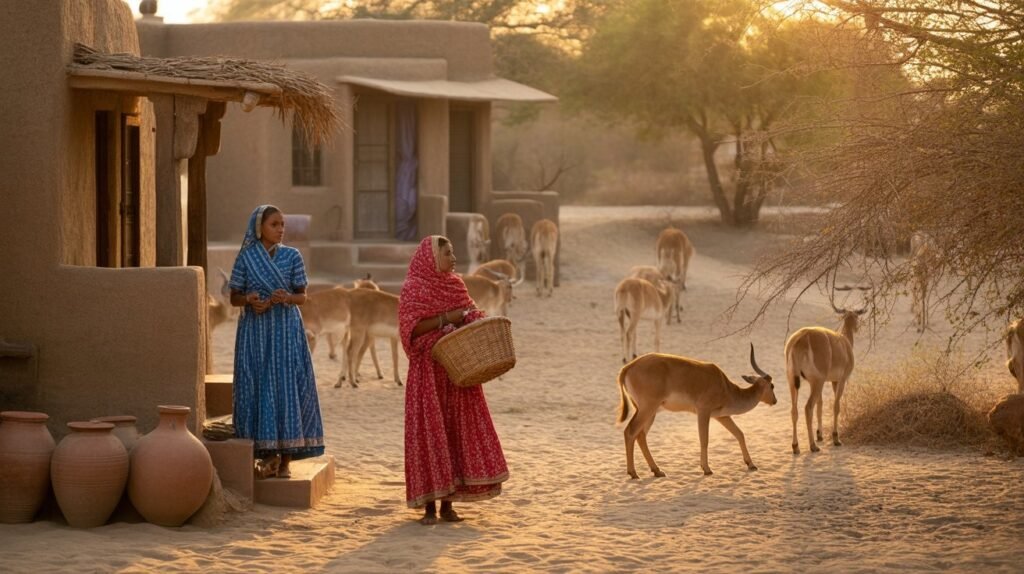
Eco-tourism in Rajasthan is often talked about more than it is practiced, but this safari is one of the clearer examples of it working. The Bishnoi community’s own conservation ethic means wildlife sightings happen without any artificial baiting or enclosures, and tourism revenue goes directly to the families running homestays, jeep transport, and craft workshops rather than large operators.
For travelers who care about where their money goes, this model of eco-tourism in Rajasthan is as important as the sightseeing itself. It is also why Bishnoi Village Safari continues to attract repeat visitors who want their trip to leave a lighter footprint.
Our earlier deep dive on Bishnoi Village Safari: Experience Rural Rajasthan and Wildlife Up Close explains more about how this conservation-first approach shapes every part of the tour.
Beyond the villages themselves, this conservation-first model has practical effects travelers can see firsthand: fewer plastic wrappers along the jeep tracks, calmer wildlife that does not scatter at the sound of an engine, and guides who clearly take pride in explaining why their community operates this way. It is a small-scale example of tourism done with the land instead of against it, and it is easy to see why other parts of Rajasthan are starting to look at this model as a template.
Final Thoughts
The Bishnoi Village Safari in Jodhpur is not a manufactured attraction dressed up for 2026 travel trends, it is a genuine, guided look at rural Rajasthan that happens to align with what more travelers are asking for: real culture, real wildlife, and real people. Between the weaver village, the potter village, and time spent understanding Bishnoi tribe culture firsthand, a single half-day trip covers more authentic ground than most week-long itineraries manage. If 2026 is the year you want to see Rajasthan beyond its forts, book directly with us and enjoy your trip.