Who Are the Bishnois, Anyway?
The Bishnoi community was founded in the 15th century by Guru Jambheshwar, who laid down 29 core principles for his followers to live by (the name “Bishnoi” comes from “bees noi,” meaning twenty-nine in the local dialect). Many of these principles are about protecting wildlife and forests, and the community has taken that seriously for centuries.
The most famous example is the Khejarli massacre of 1730, when 363 Bishnoi villagers — led by a woman named Amrita Devi — died hugging Khejri trees to stop the Maharaja’s soldiers from cutting them down for a palace construction project. That story alone is worth the drive out, and you can still visit Khejarli village today.
What makes a visit here different from most tourist stops is that the Bishnois still live exactly by these values. Blackbucks and chinkaras wander freely near their homes, nobody hunts them, and the villagers treat this coexistence as completely normal rather than a spectacle.
If you are planning a trip to Jodhpur and want more than forts and palaces, the Bishnoi Village Safari Jodhpur is the experience worth adding to your itinerary. This half-day tour takes you deep into the desert villages surrounding Jodhpur, where shepherd families, potters, weavers, and the Bishnoi community still live by traditions that go back centuries. Unlike typical city sightseeing, this safari is built around real village life, close wildlife encounters, and hands-on craft demonstrations. Whether you are visiting Rajasthan for the first time or returning for a deeper cultural experience, this guide walks you through everything you need to know before you book with Bishnoi Village Safari.
Exploring the Bishnoi Village Experience: Rajasthan’s Wildest, Realest Adventure
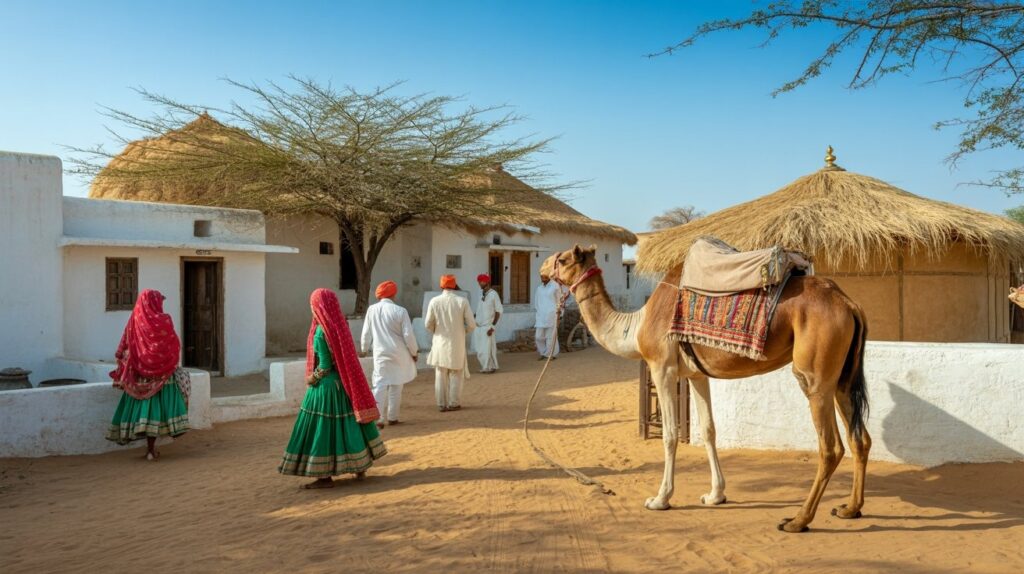
When people search for the Bishnoi Village Safari in Jodhpur, the jeep safari through desert villages is usually the first activity they find, and for good reason. The Bishnoi village jeep safari is the heart of this tour, and it is designed to feel personal rather than rushed. You are picked up from your hotel or homestay in an open jeep, and the first stop is usually a shepherd’s village where families still herd goats, sheep, and camels the way their ancestors did.
From there, the route moves through Guda village, known for its lake and resident blackbucks, before continuing to Kankani, home to skilled block printers, and Salawas, the weaving village famous for handmade durries. Lunch is typically shared with a local family, giving you a rare, unscripted look at everyday Rajasthani hospitality. Every stop on this route is guided, so nothing feels like guesswork, and the jeep safari ends with plenty of time to relax before heading back to Jodhpur.
What Makes This Jeep Safari Different?
Many desert tours in Jodhpur focus on dunes and camel rides, but this one is different because it centers on people, not just scenery. Groups stay small, jeeps stop wherever guides notice something worth explaining, and there is no fixed script forcing you through stops at a set pace. That flexibility means two safaris on the same day can look completely different depending on what the guide notices, whether it is a flock of demoiselle cranes overhead or a family willing to demonstrate pottery techniques passed down for generations.
Best Time to Book Your Safari
August through March offers the most comfortable weather for this tour, with cool mornings that make the open jeep ride pleasant and wildlife more active. Summer visits are still possible, but an early morning start is essential to avoid the desert heat. Group bookings receive better rates, and travelers staying at the on-site homestay often get discounted packages. Booking a day or two in advance is recommended during the winter tourist season, when slots fill up quickly.
Understanding the Bishnoi Community
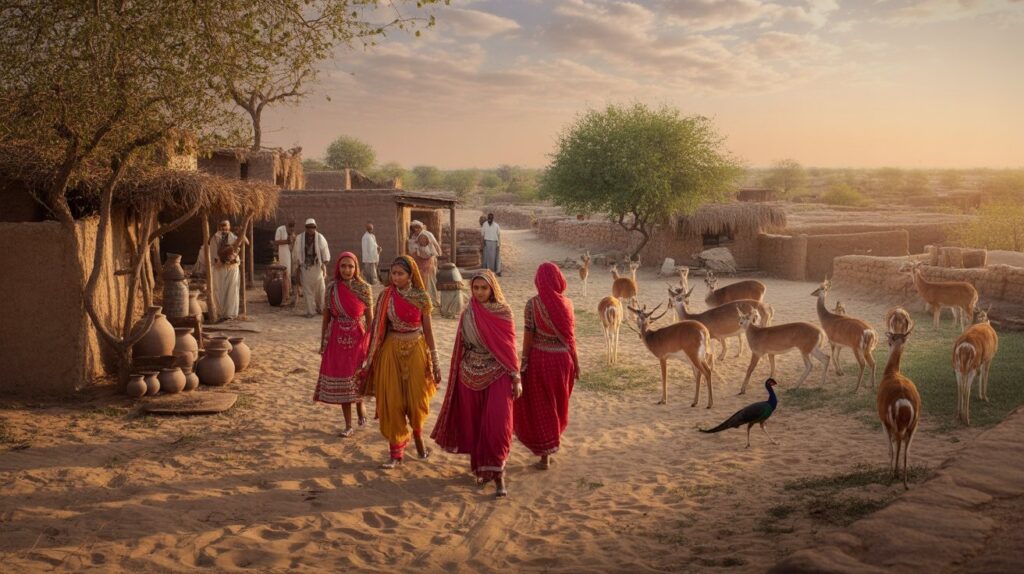
To really appreciate this safari, it helps to understand what the Bishnoi community in Jodhpur is built around. The Bishnoi people follow twenty-nine principles laid down by their spiritual leader, Guru Jambheshwar, roughly five hundred years ago. Many of these principles focus directly on protecting trees and animals, which is why blackbucks, chinkaras, peacocks, and other wildlife move freely and without fear through Bishnoi land. This is not a performance for tourists, it is a way of life that predates modern conservation movements by centuries.
Visiting a Bishnoi household during the safari usually means sitting on the floor of a mud house, sharing tea, and listening to stories about the community’s history, including the famous Khejarli sacrifice, where hundreds of Bishnois gave their lives to protect trees from being cut down. This kind of hospitality, extended so openly by the Bishnoi community Jodhpur, is one of the most memorable parts of the entire trip.
Daily Life in the Villages
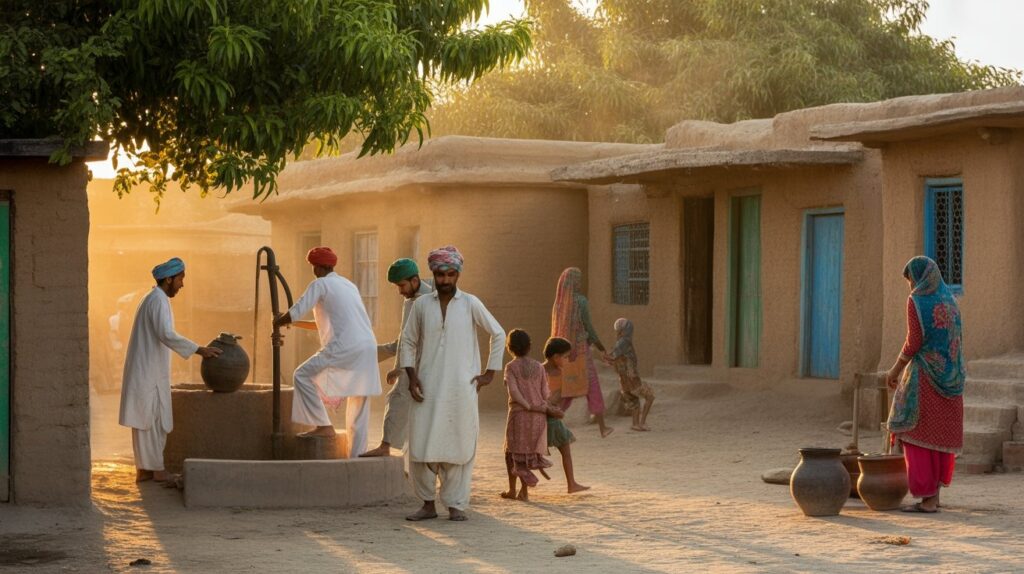
Beyond conservation, daily life in these villages revolves around farming, livestock, and close-knit family structures. Women are often seen managing households and livestock, while men handle farming and trade. Homes are simple, built from mud and thatch, and designed to stay cool through the desert heat. Children often help with smaller chores like feeding goats or fetching water, and it is common for visitors to be invited to sit and chat over chai, even without a shared language. Spending even an hour here gives visitors a far more grounded picture of rural Rajasthan than any museum could.
Why Rural Tourism in Rajasthan Thrives Around These Villages?
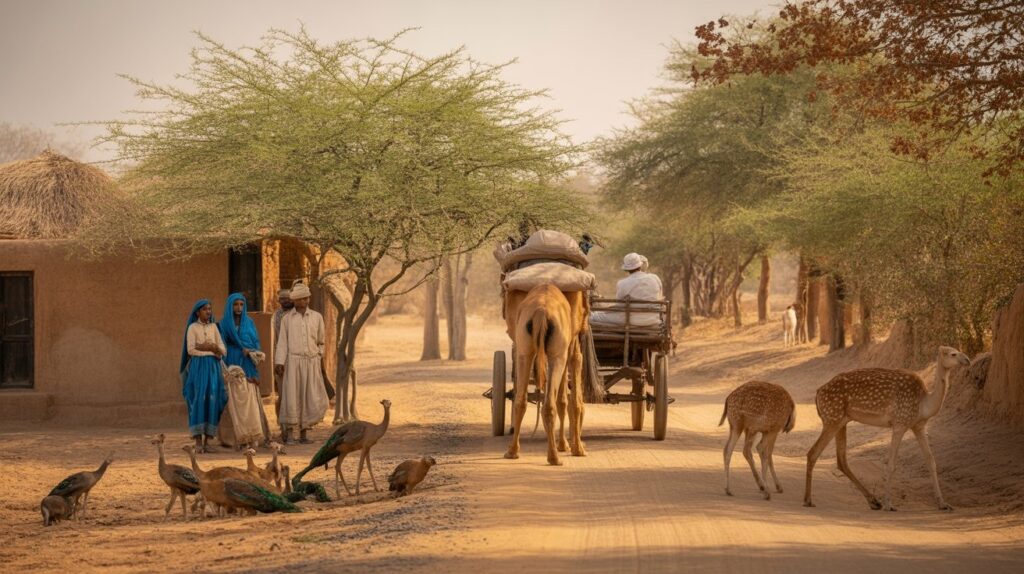
Rural tourism Rajasthan has grown steadily over the past decade, and the villages around Jodhpur are a big reason why. Travelers are increasingly looking for experiences that go beyond monuments, and this cluster of villages delivers culture, craft, and nature in a single half-day trip. Each village specializes in something different, which keeps the tour varied instead of repetitive, and instead of choosing between culture and nature, visitors get both in one route.
Villages You Will Visit
- Shepherd’s Village: traditional herding families and livestock
- Guda Village: Guda Lake, migratory birds, and blackbuck sightings
- Kankani: centuries-old hand block printing on fabric
- Salawas: handloom durrie weaving and the Pukh Raj Durry Udhyog workshop
- Potter’s Village: traditional pottery making with hands-on demonstrations
This mix of stops is exactly why rural tourism in Rajasthan continues to expand here. It gives independent travelers, families, and photographers a reason to spend a full day outside the city instead of rushing between forts. This is exactly the kind of day trip travelers book directly through our village safari when they want something more meaningful than a standard city tour.
Want to know why people keep coming back to this place, take a look at our earlier post on the top reasons to visit Bishnoi Village Safari in Rajasthan. It talks about this in more detail.
Why These Craft Villages Matter to Rajasthan’s Culture?
Every craft you see on this route survives because people like you keep choosing to buy it directly. When you pick up a block-printed scarf in Kankani or a hand-woven durrie in Salawas, that money goes straight to the artisan’s family no middleman, no markup. This is really the heart of Bishnoi village craft tourism: it’s not just a photo stop, it’s a real income source that keeps entire families and villages going. Every purchase you make here helps carry these traditional skills forward to the next generation.
Blackbuck Safari Jodhpur and the Opium Ceremony Bishnoi Tradition
Wildlife is one of the biggest draws of this route, and a blackbuck safari Jodhpur trip rarely disappoints. Because the Bishnoi protect these animals so fiercely, blackbucks graze close to villages without fear, often within a few metres of the jeep. Chinkaras, blue bulls, peacocks, and migratory cranes are also common sightings, especially around Guda Lake in the early morning or late afternoon. Guides are skilled at spotting animals from a distance and know exactly where herds tend to gather that day. If wildlife photography is a priority, mention it to your guide in advance so the route can be adjusted.
Click here to learn more about wildlife spotting on Bishnoi Village Safari before your trip. And if you love wildlife, this blackbuck safari in Jodhpur is one of the best routes you’ll find.
The Opium Ceremony Bishnoi Tradition
One of the most talked-about moments on this route is the opium ceremony that Bishnoi families sometimes perform for guests. Historically, opium was offered during weddings, negotiations, and important guest visits as a mark of respect and trust. During the safari, you may see a simplified, respectful demonstration of this ritual, explained by your guide along with its cultural context. It is presented purely as a cultural insight, not for consumption, and travelers are welcome to ask questions about its history. This small moment often stays with visitors longer than any single wildlife sighting, precisely because the opium ceremony in the Bishnoi tradition connects directly to centuries of hospitality customs.
Best Spots for Wildlife Photography
Guda Lake is consistently the strongest spot for photography, particularly at sunrise when migratory birds gather along the water’s edge and blackbucks graze nearby in soft light. The open stretches between villages also work well, since herds often cross the jeep track in the late afternoon. A zoom lens helps, but many sightings happen close enough for a standard lens to capture clearly. Guides typically know which fields have had recent activity and will route the jeep accordingly if photography is a priority.
Ready to Trade the City for the Real Rajasthan? Book your safari now and spend a day with shepherds, weavers, potters and blackbucks in their own backyard.
Final Thoughts
The Bishnoi Village Safari Jodhpur is not just another day trip, it is a genuine window into how rural Rajasthan lives, works, and protects its land. From jeep rides through shepherd villages to quiet moments at Guda Lake watching blackbucks graze, every part of the tour is built around authenticity rather than spectacle. If you want a break from forts and city crowds, book your experience with Bishnoi Village Safari and spend a day with a community that has protected its traditions, and its wildlife for over five hundred years.
Frequently Asked Questions
What is included in the Bishnoi Village Safari Jodhpur?
The tour includes open jeep transport, a guided village visit, and a traditional lunch with a local family.
How long does the Bishnoi village jeep safari take?
Most tours run as a half-day trip, typically four to five hours depending on the season.
Can I see blackbucks during the safari?
Yes, blackbucks are commonly spotted near Guda village and around Guda Lake, especially in the early morning.
What happens during the opium ceremony Bishnoi tradition?
Guides explain and demonstrate this historic hospitality ritual, though it is shown for cultural understanding, not consumption.
Is the Bishnoi Village Safari suitable for families?
Yes, the tour is family-friendly and suitable for travelers of all ages, including young children.
One Response