Most visitors come to Jodhpur for the blue lanes and the grand fort, and few expect to see antelope grazing within an hour’s drive. Yet the countryside beyond the city is alive with animals and birds that the local community has protected for centuries. This guide explains what to expect from Bishnoi village safari wildlife, which species you are most likely to meet, when to see them, and how to improve your chances with simple planning. Whether you carry a camera or only curiosity, it will help you make the most of your day in the villages.
Bishnoi Village Safari Jodhpur: The Wildlife You Can Expect
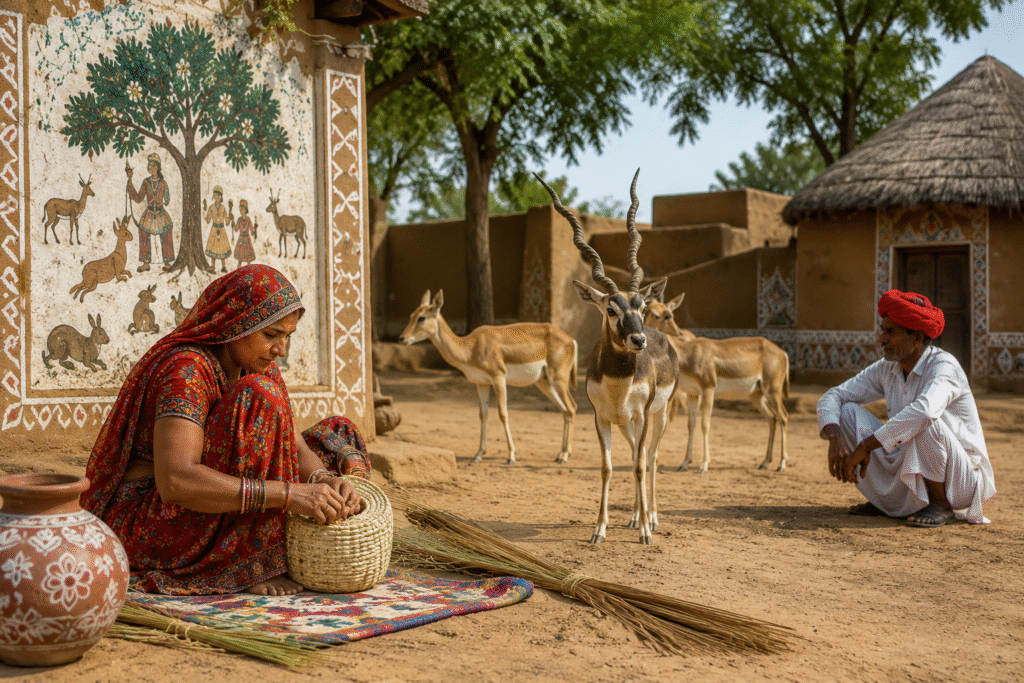
A trip into the villages south of the city feels very different from a visit to a zoo or a national park. The animals here live freely among fields, khejri trees, and open scrubland, because the Bishnoi community treats every creature as family. On a Bishnoi village safari, Jodhpur travellers usually see more than they expect, often at close range and without any crowd.
Mammals of the Scrublands
The blackbuck is the star. Males are dark brown with spiralling horns and a white belly, while females are fawn and hornless. Chinkara, the Indian gazelle, are slimmer and quicker, and you may even see them locking horns in play. Nilgai, also called blue bull, wander the field edges, and desert foxes and hares appear around dawn and dusk. Because these animals are never hunted here, they graze calmly while your vehicle passes. Their alert but unhurried manner is a good sign that the land is safe for them.
Birds Beyond the Cranes
Peacocks strut through the villages and often call from rooftops, while grey partridges dart along dusty tracks. Near the water, you may notice black-winged stilts wading in the shallows, and sarus cranes have also been reported around the lake. In winter, the real spectacle arrives in the sky. Thousands of demoiselle cranes gather at Guda Lake, and their calls fill the air in a way that stays with visitors long after the trip.
What a Typical Wildlife Stop Looks Like
Most trips pause at Guda Lake, roughly 22 to 25 km from the city, where a viewing platform gives a wide look over the water. The lake is partly artificial, and water is pumped in during the dry months so that animals and village cattle can drink. That is why the shoreline becomes a meeting point for blackbuck, chinkara, and birds. Your guide will usually stop the vehicle at a distance, point out what is moving, and let you watch quietly for a while. Binoculars make a real difference here, since many birds feed far from the bank. Turtles have also been seen in the area, so look closely at the water.
Wildlife Through the Year
Each season shows a different face of the countryside. Winter brings the cranes, cool mornings, and the most comfortable weather for long viewing. Summer is harsh, but the animals stay close to water, which makes early starts rewarding. After the monsoon, the fields turn green and the lake can fill, giving the villages a fresh look that photographers enjoy. Because the mix of species changes with the weather, two visits in different months can feel like two entirely different trips.
Bishnoi Village Jeep Safari: How to See More Animals
The way you travel shapes what you see. A Bishnoi village jeep safari lets you cover several villages and the lake edge in one outing, while the open vehicle keeps noise low and views clear. Guides at Bishnoi Village Safari can match your slot to the species you most want to see.
Best Time of Day
Early morning and late afternoon are the golden hours. Blackbuck graze actively in the cooler light, and in the evening, birds and animals come to the water to drink. Midday is quieter, as many animals rest in the shade. If photography matters to you, choose the first slot of the day or the last one, and let your guide know your priorities. Ask which way the light falls as well, because facing the sun makes animals hard to see and photograph.
Best Season
Winter is when Bishnoi village safari wildlife is at its richest. From October to March, the weather is pleasant and migratory birds are present, with demoiselle cranes usually seen between September and March. Summer, from April to June, is very hot, yet animals gather around water, so sightings can still be excellent in the early morning. After a good monsoon the lake fills up and the land turns green, which changes the scenery and the bird activity.
Simple Tips for Better Sightings
A few habits make a big difference:
- Keep your voice low and avoid sudden movements near animals
- Wear earthy colours such as brown, olive, and beige
- Carry binoculars, and a zoom lens of 200 mm or more if you photograph wildlife
- Stay in the vehicle whenever your guide asks you to
- Pack water, sunscreen, and a hat for the open landscape
- Never feed, chase, or crowd any animal
What the Route Usually Includes
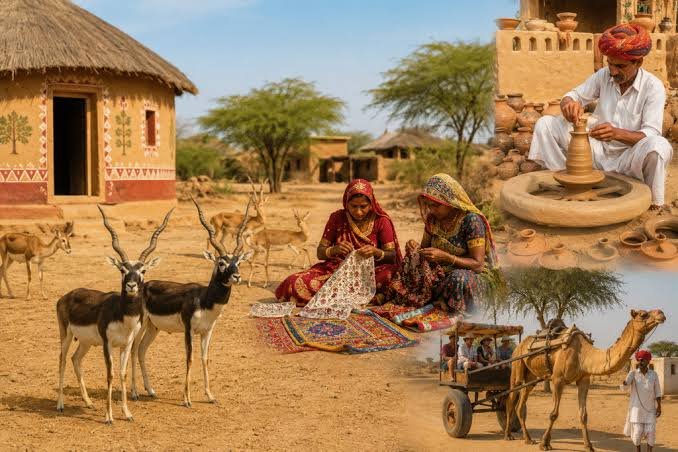
A standard outing covers three to five villages, so wildlife is only one part of the day. Between sightings you meet potters, weavers, and shepherds, and you hear the story of Khejarli. Our team at Bishnoi Village Safari plans routes that place the lake in the cooler hours and the craft stops closer to midday, when animals rest. This rhythm keeps the day balanced, and it gives you the best light for photographs without rushing any single stop.
Jodhpur Village Safari: Responsible Wildlife Viewing
A Jodhpur village safari works only because villagers protect the land and its animals. Visitors who respect those values enjoy calmer and closer sightings, and they leave a lighter footprint on the places they visit.
Why the Animals Are So Relaxed
The Bishnoi follow 29 principles that include protecting animals and trees, a faith that shaped their story at Khejarli in 1730, when villagers gave their lives to save khejri trees. Generations of care mean blackbuck and chinkara grow up without fear of people. That trust is fragile, so keep a respectful distance and let the animals decide how close to come.
Photography Etiquette
Use a zoom lens instead of walking closer, and switch off the flash. Ask permission before photographing villagers, especially women and children. For the best Bishnoi village safari wildlife photos, be patient, wait near the water, and let the animals settle before you press the shutter. Sometimes the finest frame comes after ten quiet minutes.
Plan Your Visit Early
Wildlife outings are popular in winter, so planning ahead helps. Read why reserving in advance pays off and how payment works before you confirm.
Travelling With Children and Seniors
Families and older travellers enjoy this outing because it is gentle and unhurried. Children love spotting peacocks and blackbuck, and a short briefing on staying quiet turns the trip into a small lesson in respect for nature. Choose a comfortable seat, carry a cap and water for every traveller, and tell your guide about any mobility needs beforehand so that stops can be planned with care. Short breaks in the shade also keep little ones cheerful through the morning. If you want to stay longer, our guide to a village homestay can help you shape the rest of your trip.
Frequently Asked Questions
Which animals can I see near Jodhpur?
You can see blackbuck, chinkara, nilgai, desert foxes, hares, peacocks, partridges, and, in season, migratory demoiselle cranes.
When do demoiselle cranes visit Guda Lake?
They usually arrive between September and March, with winter being the best period.
What is the best time of day for sightings?
Early morning and late afternoon are best, when animals graze and move toward water.
Is it safe to approach the animals?
No, keep a respectful distance, stay close to your guide, and never feed or chase any animal.
Do I need binoculars or a zoom lens?
They help, especially for birds at the lake, but many animals can be seen clearly with the naked eye.
Conclusion
The countryside beyond Jodhpur offers a rare chance to watch free living wildlife in a landscape shaped by compassion. With the right season, the right hour, and a respectful attitude, every traveller can enjoy memorable sightings. If you are ready to see them for yourself, contact Bishnoi Village Safari and plan your day among the blackbuck, the peacocks, and the cranes today. Every sighting is a reminder that people and wildlife can share a landscape peacefully, and a single morning in the villages is often enough to prove it.