Inside Rajasthan’s Handicraft Villages: How Local Artisans Keep Traditions Alive
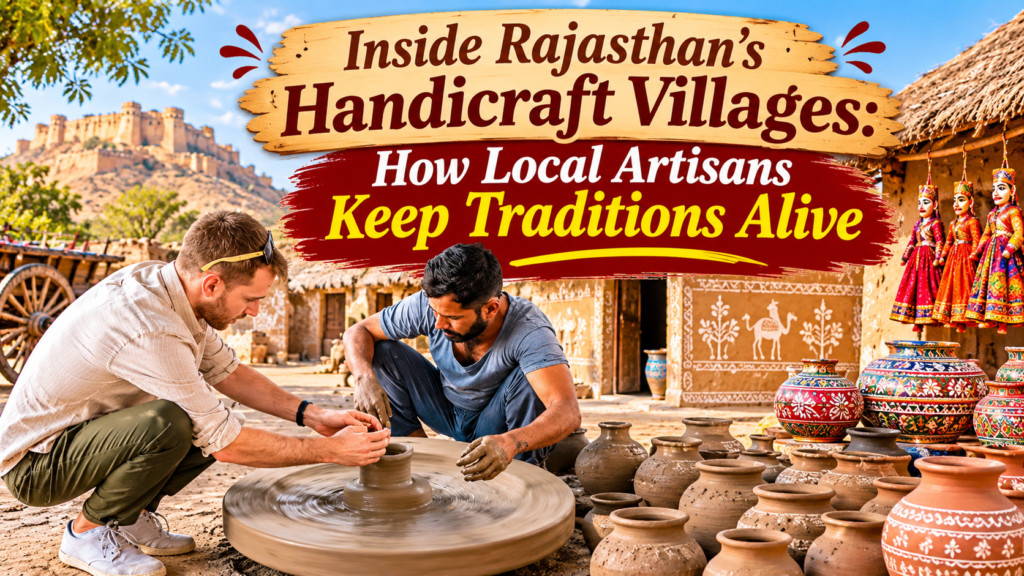
Walk into a village near Jodhpur and you hear the work before you see it: the steady knock of a wooden loom, the hum of a potter’s wheel, the soft thud of a carved block meeting cloth. These sounds have carried across the Thar for generations. A Bishnoi village arts and crafts tour lets you watch that work up close, meet the hands behind it, and understand why every piece takes so long to make. This guide explains which skills you will see, how artisans keep their traditions alive, and how to travel and buy responsibly. Art and Craft Tour in Jodhpur: Villages and Skills You Will Meet Jodhpur is known for its fort and blue lanes, yet the countryside around it holds a quieter treasure. An art and craft tour in Jodhpur usually links several small villages, each known for one skill, so a single morning can show you wool, clay, and cloth being shaped by hand. Salawas and the Dhurrie Loom Salawas is famous for dhurries, flat woven rugs made from cotton and wool. Weavers sit at wide wooden looms and pass the thread by hand, one row at a time. Stripes, diamonds, and geometric borders are handed down within families. A small rug can take days to finish, and a large one can take weeks, which explains both the price and the pride. Singhasini and the Potter’s Wheel Singhasini is a potters’ village where clay and sawdust are shaped on spinning wheels into pots, lamps, and cooling vessels. Watching a lump of mud rise into a smooth jar in seconds is a small piece of magic that children and adults enjoy equally. Many potters invite guests to sit at the wheel and try, and the laughter that follows is usually the best part of the stop. Kankani and Block Printing In Kankani, printers press carved wooden blocks into dye and stamp patterns across lengths of cloth. Every colour needs its own pass, and every block must line up perfectly with the last. The result is a repeating pattern of flowers, leaves, and geometric shapes that looks effortless but depends on steady hands and years of practice. Why Watching the Process Matters Seeing a craft being made changes how you value it. You notice the pause before a weaver changes colour, the way a potter wets his hands, and the care a printer takes to avoid smudges. Those details explain why handmade work costs more than a factory copy. They also turn a simple shopping stop into a story you can retell each time you use the piece at home. Art and Craft Travel to Rajasthan: Why Artisans Keep Traditions Alive Across the state, art and craft travel to Rajasthan has become a quiet lifeline for rural makers. When visitors come to watch and buy, a craft stops being a fading habit and becomes a living income. Skills Passed Within Families Most artisans learn by watching. Children sit beside parents at the loom or the wheel, handle scraps, and slowly take over small tasks. There is rarely a written manual. The knowledge lives in muscle memory, in family stories, and in small tricks that no classroom teaches. This is why every generation that stays in the trade protects something irreplaceable. How Visitors Support the Work Fair prices matter. When travellers buy directly from the maker, the money reaches the family instead of a long chain of middlemen. Guides at Bishnoi Village Safari choose stops where artisans are happy to demonstrate, explain their process, and sell at honest rates. That arrangement gives makers a reason to keep their workshops open and to teach their children the trade. The Challenges They Face Machine-made copies and cheap imports compete with handmade goods, and many young people move to cities in search of steady salaries. Artisans respond by adapting, with new colours, smaller items, and designs that fit modern homes while keeping the old technique intact. Thoughtful buyers help by choosing real handwork over polished imitations. The Role of Women in Craft Households In many households, women contribute at every stage, from spinning wool and preparing materials to finishing cloth and managing sales. Tourism gives them a respected way to earn from skills they already have, and it often strengthens their role in family decisions. Spending time with them, and listening to how they learned, adds a human depth that no museum display can match. Bishnoi Village Craft: Where Beliefs Meet Handwork A Bishnoi village craft is never separate from the community’s values. The 29 principles encourage simple living and respect for trees and animals, and that attitude shows in the way materials are chosen and used. Wool comes from local sheep, clay from nearby soil, and wood is used with care because green trees are protected. Slow Work and Natural Materials Nothing here is rushed. Weavers, potters, and printers measure progress in rows, firings, and drying days rather than hours. Natural materials and patient methods mean that no two pieces are identical, and small variations are treated as a sign of authenticity rather than a flaw. How to Buy Responsibly A few simple habits make your purchases fair and meaningful: Caring for Your Purchases A little care keeps handmade goods beautiful for years. Shake and air a dhurrie instead of scrubbing it, and wash block printed cloth separately in cold water at first. Wrap pottery in soft cloth or newspaper for the journey, and ask the maker to pack fragile items securely. Good packing today saves disappointment later, and a short note from the maker about care makes a lovely keepsake too. Keep the artisan’s name with every piece you buy. Planning Your Visit: Season, Timing, and Booking Good planning makes the difference between a rushed stop and a memorable day with the makers. What a Typical Day Looks Like A typical Bishnoi village arts and crafts tour begins with a hotel pickup in Jodhpur and runs for about four to six hours. You usually visit a weaving village, a
Taste Rajasthan at Its Roots: What to Expect from a Traditional Cooking Class in Jodhpur
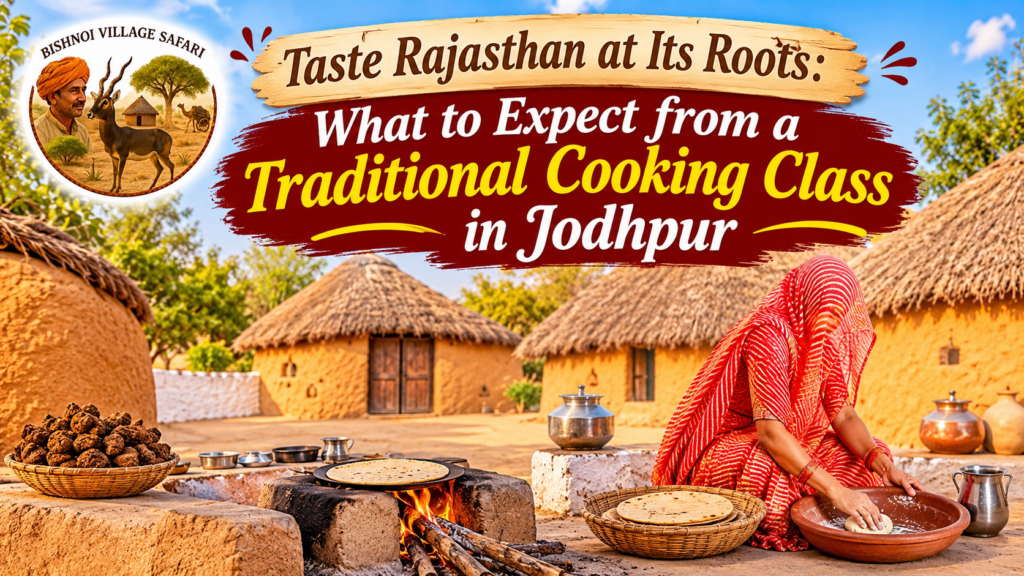
Few travel memories last as long as the taste of a meal you cooked yourself. Desert food is simple, bold, and shaped by scarcity, and the best way to understand it is to stand at the stove beside a local cook. This guide explains what happens in cooking classes in Jodhpur, which dishes you may learn, how a session usually flows, and how to prepare. Read on to turn an ordinary lunch into a story you will retell back home. Traditional Cooking Classes in Jodhpur: What You Will Learn Marwari food was built for a dry land, where fresh vegetables were rare and ingredients had to last. That history explains the dried beans, millet flour, and generous ghee found in almost every kitchen. Traditional cooking classes in Jodhpur teach you not only recipes, but also the reasons behind them. Signature Dishes Most sessions cover a few classics. You may knead and shape the baked wheat balls called baati, cook the spiced lentils known as dal, and crush sweet churma to go with them. Other favourites include gatte ki sabzi, made from gram flour dumplings in a tangy yoghurt gravy, and ker sangri, a desert dish of dried berries and beans. A hot bajra roti with fresh butter often finishes the plate. Spices and Desert Ingredients Instead of ready made powders, many hosts start with whole spices such as cumin, coriander seed, and dried red chilli. You toast them, grind them on a stone, and notice how the aroma changes at each step. Millet, gram flour, buttermilk, and ghee appear again and again, because they travel well and keep the body strong in desert heat. Fire, Clay, and Slow Cooking Some homes still cook on a wood fire or a clay stove, which gives food a smoky depth that no gas burner can match. Baati is often baked in embers, and lentils simmer for a long while until they turn creamy. Learning to read the flame, rather than a timer, is one of the quiet skills you take home from the lesson. Street Snacks and Sweets Jodhpur is also known for its snacks. Mirchi vada, a large green chilli stuffed with spiced potato and fried in gram flour batter, is a local favourite, and so is pyaaz kachori, a flaky fried pastry filled with onion. Many hosts end the lesson with makhaniya lassi, a thick, creamy and sweet drink, or a simple milk based dessert. These small dishes show how playful the cuisine can be beside its hearty main meals. Jodhpur Cooking Class: How a Session Usually Works A Jodhpur cooking class is usually small, relaxed, and led by a host who treats guests like family. Groups are kept compact so that everyone gets a turn at the stove and nobody is left watching from the back. Arrival and Welcome You are usually greeted with tea, shown around the kitchen, and introduced to the ingredients on the counter. The host explains the menu, the order of cooking, and any food customs worth knowing. This gentle start helps shy guests relax, and it sets a warm tone for the next two or three hours. Cook, Taste, and Learn Next comes the hands-on part. You chop, knead, stir, and season under guidance, and the host corrects your technique with patience and humour. Tasting along the way is encouraged, so you learn how salt, heat, and sourness balance. Questions are welcome, and many hosts share family stories while the pot simmers. Sit Down and Eat Together The session ends at the table. You eat what you have cooked, often with extra dishes prepared by the host, and conversation tends to flow easily after the effort of cooking. Many guests say this meal is the highlight of their stay, since the food tastes better when you know exactly how it was made. Families and Small Groups Classes work well for couples, families, and small groups of friends. Children enjoy shaping dough and watching the fire, while grandparents often share their own food memories. Hosts adapt the pace and the menu to suit the group, so nobody feels rushed or left out. If you travel with a larger party, mention it when you reserve, since kitchen space and seating may need extra arrangement. What to Bring and Wear A little preparation makes the class more enjoyable: Bishnoi Village Cooking Classes: Home Kitchens and Village Hospitality For travellers who want a deeper experience, Bishnoi village cooking classes move the lesson out of the city and into a family courtyard. The setting changes everything, because you cook where the food is grown, eaten, and shared. The Village Kitchen Village kitchens are simple, clean, and full of character. Mud walls keep the room cool, and food is often cooked on a wood fire while hosts and neighbours drop in to chat. Ingredients come from nearby fields and from the family’s own store, so you see the full journey from grain to plate. Guides at Bishnoi Village Safari arrange visits with host families who enjoy welcoming guests. A Vegetarian Tradition The Bishnoi follow 29 principles that include compassion for animals, and their meals are vegetarian. This makes the cooking light, seasonal, and full of lentils, millet, and vegetables. Vegetarian travellers feel especially at home, and meat eaters often leave surprised at how satisfying a plant based village meal can be. Combine Cooking With a Village Visit Many travellers combine cooking classes in Jodhpur with a village outing that includes craft stops, wildlife viewing, and tea with a family. Our team at Bishnoi Village Safari can shape a day that flows from morning sightings to a relaxed lunch you help prepare. It is a gentle, memorable way to see how food, faith, and landscape connect. Dining Etiquette in a Village Home Good manners are simple. Wash your hands before eating, sit where the host invites you, and accept food with a smile. Hosts often offer second helpings as a sign of care, so say so politely if you are full.
A Photographer’s Guide to Rural Rajasthan: Capturing Village Life Near Jodhpur
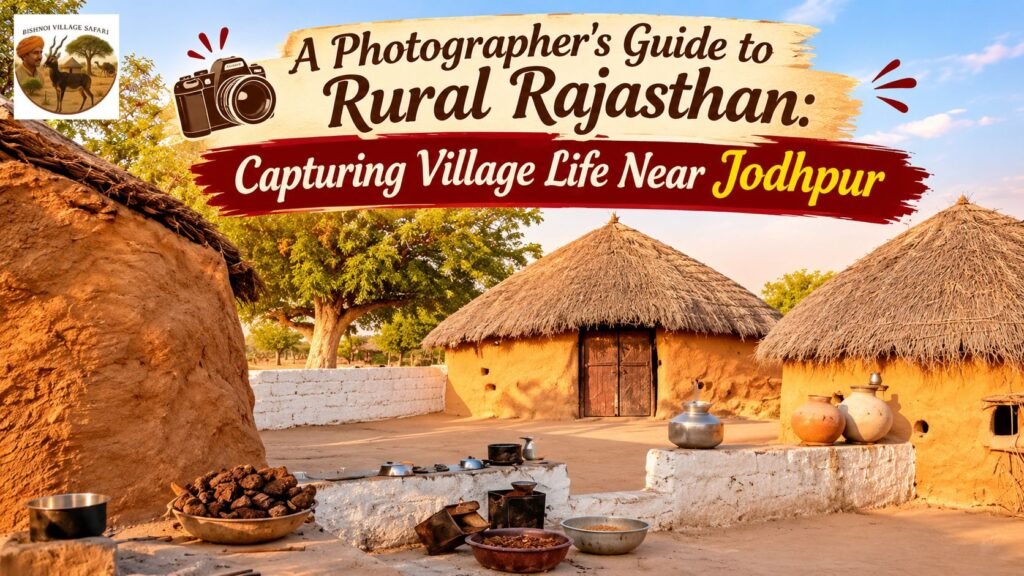
A good photograph needs three things: soft light, an honest subject, and patience. The countryside around Jodhpur offers all three within an hour of the city. Blackbuck graze beside mud-walled homes, women in bright cloth walk to the well, and winter skies fill with cranes. A well-planned Jodhpur village tour gives you time to wait for the right moment instead of rushing between stops. This guide covers the best light, the best spots, the right kit, and the manners that earn better portraits. Bishnoi Village Safari in Jodhpur: Light, Timing and Subjects The community treats animals as family, so wildlife here behaves very differently from wildlife in a park. A Bishnoi village safari in Jodhpur puts you close to relaxed animals, calm villagers, and wide open scenery, which is a rare combination for any photographer. Chase the Golden Hours Early morning and late afternoon are your best friends. The sun sits low, shadows are long, and dust in the air turns light into a warm glow. Blackbuck and chinkara are also most active at these hours. Midday light is harsh and flat, so use that time for tea, craft stops, and quiet conversations, and keep your camera ready for the evening. Wildlife Frames Expect blackbuck with spiral horns, slim chinkara, nilgai, peacocks, and partridges. From September to March, demoiselle cranes gather in large flocks near the lake. Shoot from your vehicle, since animals accept it more calmly than a person on foot. Keep your voice low, wait for a natural pose, and let the animal decide how close to come. Portraits and Daily Life People make the strongest pictures. A weaver bent over a loom, a potter shaping clay, or a shepherd leading goats at dusk can each tell a complete story. Photograph hands, tools, and textures as well as faces, because those details often feel more honest than a posed smile. Reading Animal Behaviour Watch before you shoot. A blackbuck that lifts its head and freezes is deciding whether to move, so stay still and let it relax. Animals that graze calmly will often walk into a better position, and a patient photographer is rewarded with natural poses. Sudden movement, loud talk, or a flash will break the moment, so keep your actions slow and your voice quiet. Guda Bishnoi Village Safari in Jodhpur: Best Spots for Great Frames The area around Guda is the most photogenic stretch on the route. A Guda Bishnoi village safari in Jodhpur combines a lake, open scrubland, and traditional homes in a single compact loop, so you can capture wildlife, landscape, and culture before lunch. Guides at Bishnoi Village Safari know where animals gather and when the light looks best. The Lake and Its Birds Guda Lake is the centrepiece. Animals and birds come to drink, especially in the evening, and a viewing platform gives a clear line of sight over the water. In winter, thousands of migratory demoiselle cranes land here, and the sound of their calls adds drama to every frame. Bring binoculars so you can scan the shoreline before you raise the camera. Village Lanes and Courtyards Mud walls, swept courtyards, and carved wooden doors make beautiful backgrounds. Look for repeating patterns, such as drying chillies, stacked pots, or hanging cloth, because these give your images texture and rhythm. Soft shade inside a courtyard also flatters faces, so ask your host if you may sit and wait for the light to settle. Khejri Trees and Wide Horizons The khejri tree is the symbol of the region, and it makes a strong silhouette at sunrise or sunset. Place a tree off centre, leave generous sky, and wait for an animal to step into the frame. The flat horizon of the Thar rewards simple compositions, so resist the urge to crowd the picture with too many elements. Composition Ideas for Village Scenes Try a low angle to make animals look larger against the sky. Use the doorways and arches of village homes as natural frames, and look for leading lines such as paths, fences, and shadows. Include a person or an animal for scale, and leave space in the direction they face. Jodhpur Village Safari: Kit, Settings and Technique You do not need expensive gear to take lovely pictures, but a few smart choices help. On any Jodhpur village safari, a flexible lens and a steady hand matter more than the newest camera body. Your Kit Checklist Pack these items before you leave your hotel: Simple Settings That Work For moving animals, use a fast shutter speed of around 1/1000 second and let the camera choose the aperture. For portraits in shade, open the aperture and keep the shutter steady enough to avoid blur. Shoot in raw if you can, since the warm light of dawn and dusk gives you more room to adjust colour later. Protect Your Gear from Dust and Heat Fine dust gets everywhere, so change lenses inside the vehicle with the window closed. Wrap your camera in a cloth between shots, and never leave it on a hot seat. After the trip, wipe the body and check the sensor before packing it away. A little care now prevents expensive repairs later. Editing and Storytelling Choose a handful of strong images rather than posting hundreds. Mix wide scenes, medium moments, and close details so that your set tells a story from morning to evening. Keep editing gentle, since the real colours of the desert are already rich. Add short captions naming the place and the craft, because context turns a pretty picture into a memory. Photographing Rural Rajasthan: Respect and Planning Great pictures come from good relationships, and every Jodhpur village tour is also a chance to meet people, so treat each subject as a person first and a photograph second. Ask Before You Shoot Always ask permission before photographing people, and be especially thoughtful with women and children. A smile and a gesture toward your camera usually works. If someone declines, accept it warmly and move on.
Is an Osian Desert Camel Safari Worth Adding to Your Jodhpur Trip?
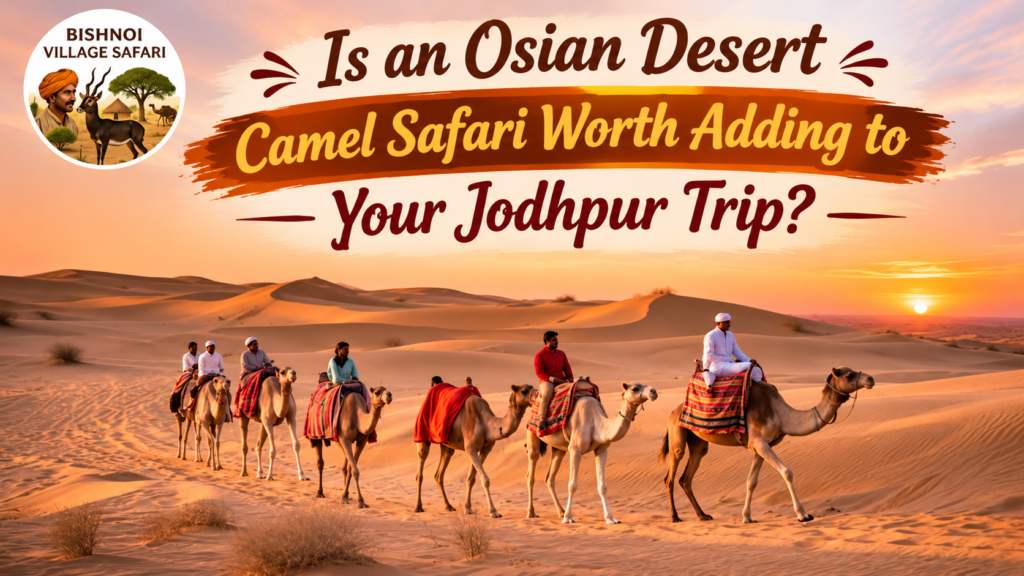
Most Jodhpur itineraries are packed with a fort, a clock tower, and a market, and few leave room for the open sand. That is a pity, because the dunes north of the city offer a very different kind of day. An Osian desert camel safari in Jodhpur combines a slow ride across golden ridges with the calm of a desert sunset and the stories of an ancient temple town. This guide explains what the experience feels like, who will enjoy it, when to go, and how to fit it into a busy trip without feeling rushed. Camel Safari in Jodhpur: What the Experience Is Really Like If you have never ridden a camel, the first surprise is how tall it feels. A camel safari in Jodhpur is unhurried and gentle, and it gives you time to watch the light change over the sand. Think of it as a slow walk with a view rather than a thrill ride. The Ride Itself The camel kneels so you can climb onto a padded seat, then rises in two lurches that feel dramatic but pass in a second. Your handler leads the animal at an easy walk, and the swaying rhythm soon becomes relaxing. Most rides last one to two hours, which is enough to feel the desert without sore legs. Hold the front handle, lean back as the camel stands, and enjoy the view. Sunrise or Sunset Sunset is the favourite, because the sand turns orange and gold and the heat falls away. Sunrise is quieter, cooler, and wonderful for photographers who like long shadows. Midday rides are best avoided, since the sun is harsh and animals tire easily. If you can only pick one, choose the late afternoon slot and stay for the colours. Comfort for First Time Riders Most people find the ride comfortable, but a few tips help. Wear long, loose trousers to avoid rubbing, keep your bag small, and tell the handler if you feel unsteady. Children usually ride with an adult, and older travellers can ask for a calm animal and a shorter route. A confident handler matters more than any other detail. Meet Your Handler and Camel Take a minute to greet your handler and ask the camel’s name. Handlers know their animals well and can tell when one is tired or restless. A friendly chat also helps you relax. Desert Safari in Jodhpur: Dunes, Temples and Camps at Osian Osian is a small town roughly 65 km north of the city, and it is the main gateway for a desert safari in Jodhpur. The drive takes about an hour and a half, which makes a half day or a full day trip realistic. The Dunes Near Osian The sand here forms long, wind-carved ridges that glow in the evening light. A typical Osian desert camel safari in Jodhpur begins at the edge of the dunes, where handlers help you mount and then lead you across the ridges. You can also walk, slide down a slope, or simply sit and watch the horizon change colour. The silence out here is part of the reward. Ancient Temples of Osian Osian is also known for its old temples, some of which date back more than a thousand years. The Sachiya Mata temple sits on a hill and draws pilgrims throughout the year, while the carved Jain temples show fine stonework from early medieval times. A short visit before or after the ride adds history to your day and gives you a reason to arrive earlier. Camps and Folk Evenings Many travellers end the day at a desert camp. Expect tea, a simple dinner, and folk songs under the stars, often with a small bonfire. Some camps offer overnight stays in tents, which suit travellers who want to see the sky at its darkest. If you plan to sleep out, carry a warm layer, because winter nights can be cold. Getting There from the City Most travellers hire a car with a driver or join a small group tour. Leaving Jodhpur around noon lets you see the temples first and reach the dunes before the golden hour. Guides at Bishnoi Village Safari can suggest a sensible schedule, so you avoid the heat and still arrive in time for the best light. Camel Safari in Thar Desert, Jodhpur: Season, Heat and Safety The desert rewards good timing and punishes poor planning. A camel safari in the Thar Desert, Jodhpur, is wonderful in the right season, and it can be tiring in the wrong one. Best Season to Go October to March is the most comfortable period, with sunny days and cool evenings. April to June is hot, and rides are only sensible at sunrise or late evening. The monsoon, from July to September, brings humid air and occasional rain, so schedules may change. Winter weekends and festival weeks are busiest, so plan ahead if you travel then. Handling the Heat Drink water often, even if you do not feel thirsty, and cover your head and neck. Avoid the midday sun, and rest in the shade if you feel dizzy. Light cotton clothes breathe better than synthetics, and sunglasses protect your eyes from glare and blowing sand. Respect the desert, and it will treat you kindly. What to Wear and Carry A simple checklist keeps you comfortable on the sand: Ride Responsibly Choose operators who care for their animals. Healthy camels have bright eyes, clean coats, and enough rest between rides. Avoid places that overload the animals or push them in extreme heat. Carry away every wrapper so the sand stays clean. Thar Desert Camel Safari in Jodhpur: Is It Worth Adding to Your Trip? A Thar Desert camel safari in Jodhpur is worth it for many travellers, though not for everyone. The answer depends on your time, your interests, and your energy. Who Will Love It Photographers, couples, families with older children, and anyone who enjoys open landscapes will find it rewarding. It is also a good fit if
Wildlife Beyond the City: Animals and Birds You May Spot Near Jodhpur
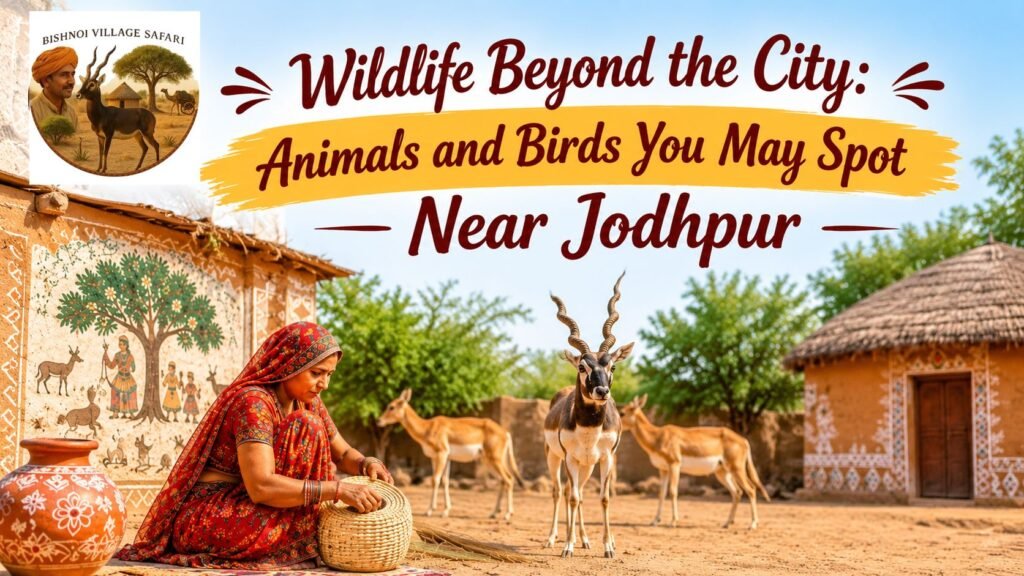
Most visitors come to Jodhpur for the blue lanes and the grand fort, and few expect to see antelope grazing within an hour’s drive. Yet the countryside beyond the city is alive with animals and birds that the local community has protected for centuries. This guide explains what to expect from Bishnoi village safari wildlife, which species you are most likely to meet, when to see them, and how to improve your chances with simple planning. Whether you carry a camera or only curiosity, it will help you make the most of your day in the villages. Bishnoi Village Safari Jodhpur: The Wildlife You Can Expect A trip into the villages south of the city feels very different from a visit to a zoo or a national park. The animals here live freely among fields, khejri trees, and open scrubland, because the Bishnoi community treats every creature as family. On a Bishnoi village safari, Jodhpur travellers usually see more than they expect, often at close range and without any crowd. Mammals of the Scrublands The blackbuck is the star. Males are dark brown with spiralling horns and a white belly, while females are fawn and hornless. Chinkara, the Indian gazelle, are slimmer and quicker, and you may even see them locking horns in play. Nilgai, also called blue bull, wander the field edges, and desert foxes and hares appear around dawn and dusk. Because these animals are never hunted here, they graze calmly while your vehicle passes. Their alert but unhurried manner is a good sign that the land is safe for them. Birds Beyond the Cranes Peacocks strut through the villages and often call from rooftops, while grey partridges dart along dusty tracks. Near the water, you may notice black-winged stilts wading in the shallows, and sarus cranes have also been reported around the lake. In winter, the real spectacle arrives in the sky. Thousands of demoiselle cranes gather at Guda Lake, and their calls fill the air in a way that stays with visitors long after the trip. What a Typical Wildlife Stop Looks Like Most trips pause at Guda Lake, roughly 22 to 25 km from the city, where a viewing platform gives a wide look over the water. The lake is partly artificial, and water is pumped in during the dry months so that animals and village cattle can drink. That is why the shoreline becomes a meeting point for blackbuck, chinkara, and birds. Your guide will usually stop the vehicle at a distance, point out what is moving, and let you watch quietly for a while. Binoculars make a real difference here, since many birds feed far from the bank. Turtles have also been seen in the area, so look closely at the water. Wildlife Through the Year Each season shows a different face of the countryside. Winter brings the cranes, cool mornings, and the most comfortable weather for long viewing. Summer is harsh, but the animals stay close to water, which makes early starts rewarding. After the monsoon, the fields turn green and the lake can fill, giving the villages a fresh look that photographers enjoy. Because the mix of species changes with the weather, two visits in different months can feel like two entirely different trips. Bishnoi Village Jeep Safari: How to See More Animals The way you travel shapes what you see. A Bishnoi village jeep safari lets you cover several villages and the lake edge in one outing, while the open vehicle keeps noise low and views clear. Guides at Bishnoi Village Safari can match your slot to the species you most want to see. Best Time of Day Early morning and late afternoon are the golden hours. Blackbuck graze actively in the cooler light, and in the evening, birds and animals come to the water to drink. Midday is quieter, as many animals rest in the shade. If photography matters to you, choose the first slot of the day or the last one, and let your guide know your priorities. Ask which way the light falls as well, because facing the sun makes animals hard to see and photograph. Best Season Winter is when Bishnoi village safari wildlife is at its richest. From October to March, the weather is pleasant and migratory birds are present, with demoiselle cranes usually seen between September and March. Summer, from April to June, is very hot, yet animals gather around water, so sightings can still be excellent in the early morning. After a good monsoon the lake fills up and the land turns green, which changes the scenery and the bird activity. Simple Tips for Better Sightings A few habits make a big difference: What the Route Usually Includes A standard outing covers three to five villages, so wildlife is only one part of the day. Between sightings you meet potters, weavers, and shepherds, and you hear the story of Khejarli. Our team at Bishnoi Village Safari plans routes that place the lake in the cooler hours and the craft stops closer to midday, when animals rest. This rhythm keeps the day balanced, and it gives you the best light for photographs without rushing any single stop. Jodhpur Village Safari: Responsible Wildlife Viewing A Jodhpur village safari works only because villagers protect the land and its animals. Visitors who respect those values enjoy calmer and closer sightings, and they leave a lighter footprint on the places they visit. Why the Animals Are So Relaxed The Bishnoi follow 29 principles that include protecting animals and trees, a faith that shaped their story at Khejarli in 1730, when villagers gave their lives to save khejri trees. Generations of care mean blackbuck and chinkara grow up without fear of people. That trust is fragile, so keep a respectful distance and let the animals decide how close to come. Photography Etiquette Use a zoom lens instead of walking closer, and switch off the flash. Ask permission before photographing villagers, especially women and children. For the best Bishnoi
Meet the Bishnoi Community: Traditions, Beliefs and Everyday Village Life
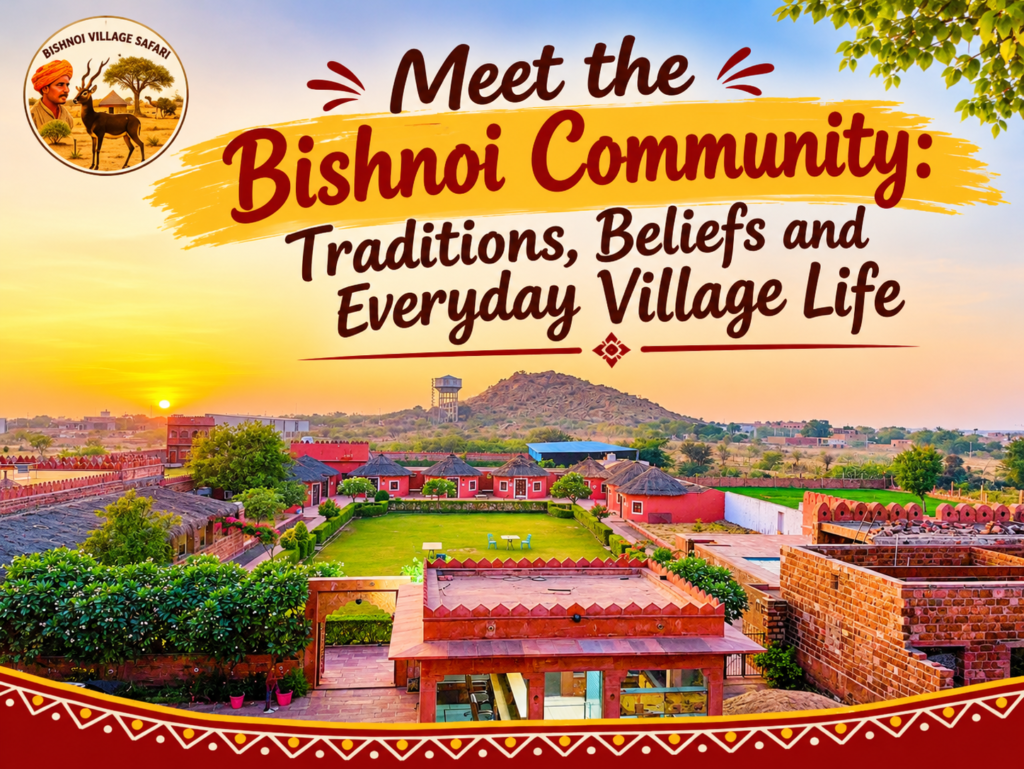
Many travellers know the Bishnoi as the people who protect blackbuck and trees, yet few understand the beliefs behind that kindness. A Bishnoi village tour in Jodhpur is the best way to learn them, because you meet families, hear the stories, and see daily life as it is actually lived. This guide explains who the Bishnoi are, what they believe, how an ordinary day unfolds in their villages, and how to visit with respect. Read on to turn a simple outing into a meaningful cultural experience. Bishnoi Village Safari in Jodhpur: Meet the People Behind the Tradition The community lives in villages around Jodhpur and across the wider Thar region. On a Bishnoi village safari in Jodhpur, you quickly notice how calm the countryside feels, and how closely people live alongside trees, animals, and open land. Origins of the Faith The Bishnoi faith was founded in 1485 by Guru Jambheshwar, also known as Jambhoji, who taught his followers to live simply and protect all living things. He gave them 29 rules for daily life, and the name Bishnoi is commonly linked to the words for twenty and nine. Over five centuries, these teachings have shaped the villages you see today. Many families can recall the founder’s story as easily as their own family history, and they share it with visitors who ask with genuine interest. The 29 Principles in Daily Life The principles cover compassion for animals, protection of green trees, clean water, simple living, honesty, and a vegetarian diet. They are not distant ideas written in a book. They guide how families plant, cook, farm, and raise their children. Villagers do not harm wildlife, which is why blackbuck and chinkara graze so close to homes, and why many visitors leave surprised at how peaceful the land feels. The Story of Khejarli In 1730, a village woman named Amrita Devi refused to let royal workers cut the sacred khejri trees. She embraced a tree, and many villagers followed her, with the commonly cited toll being 363 lives. The event is remembered as one of the earliest acts of tree protection in India, and it inspired later movements to save forests. A guide will usually narrate this story at the memorial, and it often becomes the most moving moment of the day. Care for Trees and Water The khejri tree is often called the lifeline of the desert. It gives shade, fodder for animals, and pods that villagers cook as a local delicacy. Bishnoi families plant, guard, and respect these trees, and they keep water points and grain feeders for birds near their homes. Small gestures like these explain why the landscape looks green in places where you might expect only dust. Travellers who notice them begin to see the villages as one connected, caring system. Compassion for Animals Few stories travel as widely as the tale of village women nursing orphaned fawns alongside their own children. Whether you hear it from a guide or a host, it captures the spirit of the community. Animals are treated as family members, not as property or entertainment. That attitude shapes everything from farming to festivals, and it is the reason travellers are asked to keep a gentle distance and a quiet voice. Guda Bishnoi Village Safari in Jodhpur: Everyday Life and Crafts A Guda Bishnoi village safari in Jodhpur is usually the heart of any outing. The village sits roughly 22 to 25 km from the city, and it combines home visits, lake views, and craft stops in one easy route. Guides at Bishnoi Village Safari introduce you to host families so that every conversation feels natural rather than staged. A Morning in the Village Mornings begin early. Women prepare tea and bread over wood fires, children walk to school, and shepherds lead goats, sheep, and camels to graze. Homes often have swept courtyards and simple mud walls that keep rooms cool in summer. Women are often seen in bright orange and red clothing with traditional jewellery, while men usually wear white. Sitting with a family for tea, even briefly, teaches you more than any brochure can. Crafts You Can Watch The villages around Jodhpur are known for handmade work. At Salawas, weavers produce flat woven rugs called dhurries on wooden looms. Potters shape clay on spinning wheels, and block printers stamp patterns onto cloth with carved wooden blocks. Many artisans let guests try the craft, and buying directly from them puts money straight into the village economy. Food and Hospitality Meals are vegetarian and freshly made, usually with millet bread, lentils, seasonal vegetables, and curd. Hosts serve food with great care, and guests are treated as honoured visitors. Accepting tea or a meal with a smile is a quiet way to say thank you, and it often opens the door to longer conversations about village life. Do not worry about language, because a smile, a few gestures, and your guide’s translation are usually enough to connect. Schools and Changing Times Village life is not frozen in the past. Children attend school, young people use mobile phones, and many families mix farming with other work. Some outings include a short stop at a village school, where teachers and students are happy to talk. The result is a living culture that holds on to its values while adapting to the modern world. Watching that balance in action is one of the most thoughtful parts of the visit. Visiting Respectfully: Customs to Follow in Rural Rajasthan The Bishnoi welcome visitors warmly, and a few simple habits keep that welcome open for everyone. Travellers who follow local customs in rural Rajasthan usually enjoy deeper conversations and warmer smiles. Simple Etiquette to Remember Keep these points in mind during your visit: Best Time to Go Planning a Bishnoi village tour in Jodhpur between October and March gives you pleasant weather and the lively winter countryside. Mornings and late afternoons are cooler and more photogenic, and summer visits are best kept to early starts because the sun
What Payment Methods Are Accepted for Bishnoi Village Safari Booking?
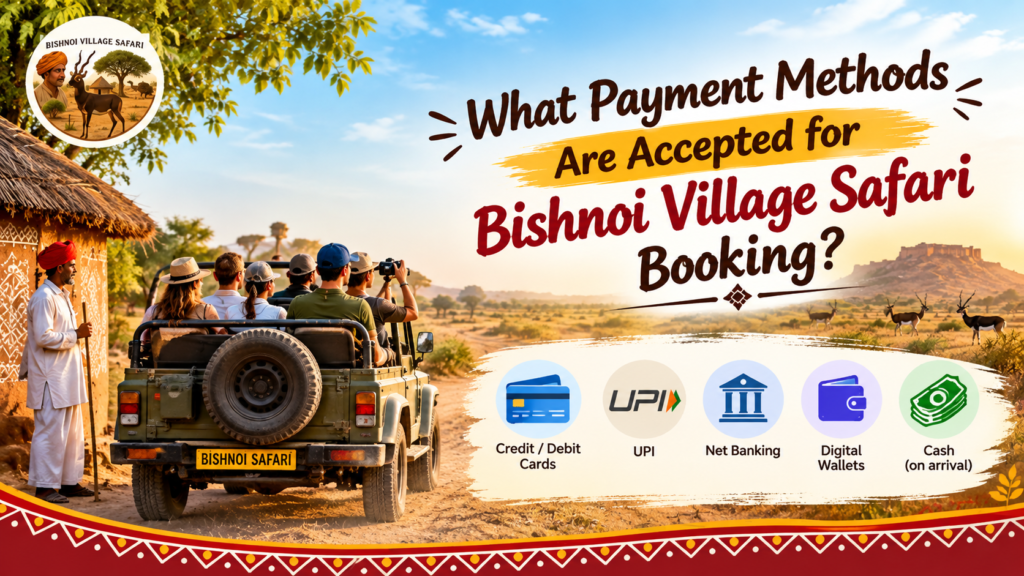
You have picked your dates, chosen a slot, and now the practical question arrives: how do you pay? Many travellers hesitate at this step, especially when they are booking from another city or country. This guide explains what to expect from Bishnoi village safari booking, which payment options travellers commonly use, what the price usually covers, and how to keep every transaction safe and documented. By the end, you will know exactly how to pay, what to keep as proof, and which questions to ask before you confirm. Whether you are a solo traveller, a couple, or a family, these steps keep payment simple. Bishnoi Village Safari Cost Per Person: What Your Payment Covers Before you choose a payment method, it helps to understand the price. The Bishnoi village safari cost per person usually depends on the duration of the trip, the size of your group, and the inclusions you choose. As a rough guide, half-day and full-day village tours around Jodhpur are commonly listed between about Rs 1,200 and Rs 3,700 per person. Always confirm the exact figure with the team in writing, so there are no surprises when it is time to pay. What the Price Usually Covers Most village tours include hotel pickup and drop-off in Jodhpur, a vehicle with a driver, and a local guide. They also cover visits to potters, weavers, and block printers, along with tea at a village home. Some trips include a home cooked Rajasthani lunch, while others ask you to pay the host family directly. Ask which applies to your plan, because it changes the total you should expect. What May Cost Extra A few items often sit outside the base price. These can include a village lunch, handmade rugs or pottery you choose to buy, optional camel rides, and drop-offs outside the usual pickup zone. A small tip for your guide and driver is also common, though always optional. Asking about extras early helps you carry the right amount of cash and avoids awkward moments on the day. It also shows you which items are optional, so you stay in control of your budget. Group Size and Child Pricing Larger groups often share one vehicle, which can lower the cost for each traveller, while very small groups may pay a little more per head. Children may be charged at a reduced rate or travel free, depending on age and seating. Mention every traveller and their ages while asking for a quote, and ask for a single total so the amount you pay matches what was agreed. Bishnoi Village Safari Payment Online: Options Travellers Commonly Use Paying digitally is the fastest way to lock your slot, and it suits travellers who book from abroad or from another Indian city. Bishnoi village safari payment online is typically handled through simple, familiar channels. Our team at camel safari jodhpur can guide you to whichever option suits you best. Common Online Options Travellers usually choose from the following: Availability can vary, so ask the team which options are active before you travel. Advance Deposit or Full Payment Many hosts ask for a small advance to hold your date and collect the balance on the day. Others prefer full payment before travel during busy weeks. Ask which rule applies to you, and request the balance amount in writing. If you are still deciding when to reserve, our post on why reserving in advance pays off explains how early planning protects your slot. Tips for Overseas Guests If you are travelling from abroad, check whether the amount is quoted in rupees or in your own currency, and ask which one will be charged. International cards may add conversion fees through your bank, so a quick call to your card provider can save money. Paying a few days before travel gives you time to fix any failed transaction without stress. How to Pay Online Safely Start by sharing your date, group size, and pickup point. Wait for the team to send the final amount along with a payment link or UPI ID. Before you pay, check that the name shown on your screen matches the business name. After paying, take a screenshot and ask for a written confirmation. This simple routine takes two minutes and removes almost every payment doubt. Bishnoi Village Safari Jodhpur Tickets: Confirmation and Receipts Once you pay, you should receive clear proof. Your Bishnoi village safari Jodhpur tickets are usually a simple confirmation message or voucher sent through WhatsApp, email, or SMS, rather than a printed ticket. This is normal for small, locally run tours, and it keeps the process quick. What a Good Confirmation Contains A reliable confirmation lists your name, travel date, time slot, pickup point, group size, amount paid, and any balance due. It should also include a working contact number for the day of travel. If any of these details are missing, ask for a corrected message before you leave your hotel. Keep Your Records Handy Save the payment screenshot and the confirmation message in one folder on your phone, and keep an offline copy in case the network is weak in the villages. If your tickets do not arrive within a few hours of payment, message the team and ask again. Sharing the confirmation with your hotel desk is also a smart step, since it helps them arrange the pickup smoothly. Keep the contact number saved, so you can reach the team if your plans shift. Bishnoi Safari Jodhpur: Paying on Arrival and Staying Safe Not every traveller wants to prepay. Some prefer to settle on the day, particularly for a Bishnoi safari Jodhpur trip arranged through a hotel or a local contact. This is possible in many cases, though you should confirm it first. Cash and Balance Payments Cash is widely used in rural Rajasthan, and it is usually accepted for balances and for crafts you buy from artisans. Carry small notes, since change can be limited in villages. Agree on the balance amount before the
What Are the Day Tour Options for Bishnoi Village Safari from Jodhpur?
Planning a short escape from the Blue City? The Bishnoi Village Safari Day Tours in Jodhpur offer you the chance to see rural Rajasthan, wildlife, and village crafts in just one day. You do not need a long trip or a heavy budget. Most tours start in the morning, cover three to four village stops, and bring you back to your hotel by evening. In this guide, we explain every day tour option in simple words so you can pick the one that suits your time, budget, and interests. Bishnoi Village Safari in Jodhpur: A Quick Overview Who Are the Bishnois? The Bishnoi people live in small villages about 25 to 30 km from Jodhpur. They follow 29 rules given by Guru Jambheshwar in the 15th century. Many of these rules protect trees and animals. That is why you often see blackbucks, chinkara deer, and peacocks walking freely near homes and fields. Visiting these villages feels calm, warm, and very different from a busy city. What Does a Day Tour Include? A Bishnoi Village Safari in Jodhpur usually means a half-day or full-day trip by road. You visit village homes, meet local families, watch artisans at work, spot wildlife, and enjoy simple home-style food. Every option below builds on this base. You can choose one activity or mix two or three to create your own plan. Guides speak Hindi and English, and they explain local customs in an easy way, so even first-time visitors feel comfortable. Bishnoi Village Safari Jeep Tours: The Classic Day Option What You Will See The jeep safari in Bishnoi Village is the most loved choice for first-time visitors. You sit in an open jeep and travel on sandy village tracks that regular cars cannot cover. Along the way, you can spot blackbucks, chinkara deer, nilgai, and colorful peacocks. Guides stop at a Bishnoi home, where families welcome you with tea and share stories about their way of life. Many tours also include the Khejarli memorial, which honors the villagers who gave their lives in 1730 to save Khejri trees. Duration and Best Time A standard jeep tour takes four to five hours. Morning trips start around 8 AM, when animals are active and the air is cool. Evening trips start around 3 PM and end with a golden sunset over the fields. Winter, from October to March, is the ideal season. Summers are hot, so carry water and a hat. Local teams like Bishnoi Village Safari plan the route based on the season, so you get the best chances of seeing wildlife. Who Should Choose It Jeep tours suit families, solo travelers, and small groups. Children enjoy the bumpy ride, and photographers love the open views. If you have only one day in Jodhpur and want the full village experience, this is the safest pick. Oasian Desert Camel Safari in Jodhpur: A Slow and Scenic Ride The Camel Ride Experience If you want a calm and traditional way to see the countryside, try the Oasian Desert Camel Safari in Jodhpur. Camels move slowly, so you notice small details like village wells, grazing herds, and farmers at work. The sandy ground and open sky make you feel far away from the city, even though you are close to it. Rides are usually one to two hours and can be added to a jeep tour. Guides help beginners climb on and off safely, and they walk beside the camel if you feel nervous. Sunrise and Sunset Rides Many travelers pick a sunset ride because the desert light makes every photo look special. Sunrise rides are quieter and cooler, and you may spot birds and deer near the dunes. Both options end with a cup of hot masala chai, which is a lovely way to finish the ride. Who Should Choose It This option suits couples, families with older children, and anyone who likes slow travel. Guests with back pain or fear of heights should choose a short route or stay with the jeep option. Art and Craft Tour in Jodhpur: Meet the Village Artisans Pottery, Weaving, and Block Printing The Bishnoi belt is known for handmade crafts that families have practiced for generations. On an art and craft tour in Jodhpur, you visit small workshops where potters shape clay on a wheel, weavers make durries on wooden looms, and printers stamp cotton cloth with carved wooden blocks. Artisans explain each step in simple words, and you can try the craft yourself. Making a small clay pot or printing your own scarf is fun for adults and children alike. Buying Directly From Makers Prices are fair because you buy straight from the artist, and your money supports the village family. Many visitors take home small pots, shawls, and printed scarves as gifts. This stop also pairs well with a jeep trip, which is why many travelers love Bishnoi Village Safari Day Tours packages in Jodhpur that mix wildlife and culture in one day. Time Needed An art and craft visit takes about two to three hours. You can add it to a morning jeep ride or keep it as a relaxed afternoon plan. Bishnoi Village Cooking Classes: Taste Real Rajasthani Food What You Will Cook Food lovers should not miss Bishnoi Village cooking classes. You sit in a village courtyard and learn to make dishes like dal, bajra roti, kadhi, and ker sangri, a desert vegetable dish. Everything is cooked on a traditional clay stove using fresh local ingredients. Local hosts show you how to knead dough, roast rotis, and add spices in the right amount. The best part is that you eat what you cook, sitting on the floor, just like the villagers do. Why It Feels Special The recipes are simple, healthy, and mostly vegetarian, and they have been passed down for many years. You also get to chat with the family, ask questions, and learn about daily village life. It is a warm and personal experience that no restaurant can offer. A cooking class
What Are the Best Timings for a Bishnoi Village Safari?
Timing can make or break a village trip in Rajasthan. Knowing the right bishnoi village safari timings helps you dodge the heat, see more wildlife and capture golden light for your photos. Whether you have only a morning free or a whole day to spare, the schedule you pick shapes what you see and how comfortable you feel. In this guide, we cover the best hours, the best months and simple ways to plan around your itinerary, so your outing runs smoothly from pickup to drop-off. Quick Answer: What Is the Best Time of Day? For most travellers, the best choice is an early morning departure between 7:30 AM and 9:00 AM, or a late afternoon start around 2:30 PM to 3:30 PM. Mornings are cool and wildlife is active, while afternoons bring soft light and a relaxed pace. Midday is the hottest and least comfortable window, so it is best avoided from April to September. Operators usually adjust pickup times to your hotel and the season, so confirm the exact schedule when you book. Morning Departure (Recommended) Morning trips give you the best chance to spot blackbuck, chinkara and peacocks near the villages and Guda Bishnoi Lake. Animals feed and move about before the heat builds. An open bishnoi village jeep safari at this hour feels fresh and quiet, and potters and weavers are already at work, so you see crafts in action rather than in a display. Afternoon and Sunset Departure Afternoon slots start after lunch and end near dusk. The light turns golden, which is perfect for portraits and wide landscapes. You may also catch herds returning to water and shepherds guiding their flocks home. The atmosphere can be slightly busier, but this slot works well if you had an early start elsewhere in the city. Half Day or Full Day: Which Schedule Fits You? Half Day Schedule A half day trip lasts about four to five hours and covers the main village stops, a jeep ride and tea with a local family. Many travellers booking bishnoi village safari day tours jodhpur choose this option because it fits easily beside fort and palace visits in the city. Full Day Schedule A full day usually runs from around 8:00 AM to 5:00 PM. It adds more villages, a home cooked lunch and extra wildlife time. Choose it if you love photography, want a slower pace or are travelling with a group that has varied interests. Best Months and Seasons for Your Visit Rajasthan’s climate changes sharply through the year, so the season matters as much as the hour. Here is a simple breakdown to help you choose: In the cooler months, daytime temperatures stay comfortable, which lets you enjoy longer outdoor stops without rushing. If you can only travel in summer, start as early as possible and keep the trip short. Bring a scarf for dust and a spare layer for chilly mornings, since temperatures can swing quickly between sunrise and noon. Stay hydrated at every stop, and take short breaks whenever the sun feels strong. Best Timings for Wildlife and Photography Wildlife Spotting Hours Blackbuck and chinkara are most active in the first two hours after sunrise and in the last hour before sunset. Guda Bishnoi Lake is a key water point, and winter brings migratory birds to the area. Speak softly, move slowly and let your guide lead the way to the best viewing spots. Photography Tips Golden hour gives the warmest light for portraits of villagers and animals. Carry a zoom lens for wildlife, and ask permission before photographing people. Mid morning is also lovely for pottery and weaving scenes, because natural light streams into the courtyards. Timings for Camel Rides and Desert Add-Ons Many guests pair the village visit with a sunset ride across the dunes. A camel safari in thar desert jodhpur works best in the late afternoon, when the sand is cooler and the sky glows orange. If you want a relaxed experience, book a thar desert camel safari jodhpur outing for a separate day, since the dunes lie farther from the villages and travel time adds up. Winter evenings are the most comfortable for this activity. A Sample Hour by Hour Plan A typical morning outing begins with hotel pickup around 8:00 AM and a scenic drive past farms and Khejri trees. By 9:00 AM you reach the first village and meet potters and weavers at work. Around 10:30 AM you switch to the open jeep for wildlife trails and a stop near the lake. The day usually wraps up with tea in a Bishnoi home and a drop back in the city by 12:30 PM. An afternoon plan follows the same flow, just shifted by about six hours, so you finish close to sunset. Weekday or Weekend: When Is It Less Crowded? Weekdays are generally quieter, which means more personal time with each host family and easier scheduling. Weekends and public holidays see more local visitors, so book earlier if you want a specific hour. During festivals like Diwali, expect a lively atmosphere and slightly tighter availability, though the village welcome stays just as warm. Common Timing Mistakes to Avoid The most common mistake is choosing a midday start in summer, which leaves you tired and uncomfortable. Another is packing too many city sights into the same morning, which forces you to rush the village stops. Some travellers also forget to allow for travel time, then feel pressed to leave early. Finally, skipping a written confirmation of pickup time can cause confusion. A little planning removes all of these problems and lets you enjoy every stop at an easy pace. How to Plan and Book Your Slot Book at least 48 hours ahead in peak season so you can secure your preferred hour. A Jodhpur Bishnoi village tour is easy to arrange through a hotel desk, a local operator or a direct phone call. The drive from the city takes about 30 to 45 minutes, so share your hotel
Should You Book a Bishnoi Village Safari in Advance?
Rajasthan travellers often plan forts and palaces with great care, then leave the countryside to chance. That is a risky habit. A rural jeep tour depends on small groups, local hosts, and wildlife that follows the sun, so seats and slots matter more than most people expect. In this guide, we explain why Bishnoi village safari booking works better when done early, what you actually secure by reserving ahead, and the few situations where a last-minute walk-in still works. Read on before you lock your Jodhpur itinerary, because the right planning can turn a decent outing into a memorable one. We also share practical tips on timings, seasons, group size, and what to carry, so you arrive prepared and relaxed. Bishnoi Village Safari Timings: Why Slots Fill Faster Than You Expect Village outings do not run on a fixed public schedule like a train. Each departure is built around the light, the heat, and the movement of blackbuck and chinkara toward water. Knowing the Bishnoi village safari timings before you travel helps you plan your pickup, your meals, and the rest of your day in Jodhpur without any last-minute rush. The Morning Slot Morning departures usually begin between 8:00 and 8:30 AM. The air is cool, the light is soft, and photographers love this window. Birdwatchers prefer it too, because the lake edge is calmer and the flocks are active. It also lets you finish before the midday heat, which matters from April to June, when Jodhpur temperatures climb sharply. Because this is the most requested slot, it is usually the first one to be taken. The Afternoon Slot Afternoon departures typically start around 2:30 PM. As the heat eases, animals move toward Guda Lake for water, which can mean closer sightings of blackbuck and chinkara. The golden hour also gives the villages a warm glow that suits portraits and landscape shots. Both windows run roughly five to six hours when pickup and drop-off are included, so mention your preferred time while reserving. How the Season Changes Your Start Time Winter mornings from November to February are crisp, so a slightly later pickup keeps you comfortable while wildlife stays active. In summer, early starts are essential because the sun turns harsh soon after 10:00 AM and animals rest in the shade. The monsoon, from July to September, turns the land green and the lanes muddy, so schedules may shift with the rain, and good hosts will warn you early. Confirming your slot in advance lets the team adjust the timing to the weather, instead of leaving you with a poor window. Bishnoi Village Safari Day Tours Jodhpur: What an Early Reservation Secures At Bishnoi Village Safari, every outing is built around a host family, an artisan, a driver, and a guide who must all be ready at the same moment. When you reserve ahead, the team can line all of this up for you. The tours travellers love most usually combine wildlife, crafts, and food in a single trip. What a Typical Day Looks Like A usual day moves between wildlife and craft. You begin with a stop at a shepherd hamlet, where you see how families live with goats, sheep, and camels. Next comes Guda Lake, the best place for blackbuck, chinkara, peacocks, and birds. You then visit potters, weavers, and block printers, and many trips end with a home cooked Rajasthani meal. Each stop depends on someone being ready for you, which is why last-minute changes are hard to manage. A planned day also leaves time to talk with villagers, ask questions, and take photographs without hurrying to the next stop. What You Lock In by Booking Ahead Here is what advance planning typically gets you: Seasonal Demand Demand for Bishnoi village safari day tours Jodhpur peaks between October and March, when the weather is pleasant and festivals bring heavy tourist traffic. September to March is also when thousands of migratory demoiselle cranes gather at Guda Lake, which draws birdwatchers from across the world. Peak weeks around Diwali, Christmas, and New Year can fill quickly, and in these weeks even a day’s delay in confirming can cost you your preferred slot. A Better Experience for Villagers and Wildlife Advance planning is kinder to the villages too. When hosts know group sizes beforehand, they can prepare food, avoid crowding homes, and keep the visit calm for the animals. Responsible Bishnoi village safari booking also spreads visitors across the day instead of sending everyone to the lake at once. Bishnoi Safari Jodhpur: Can You Walk In Last Minute? Many travellers ask whether they can simply turn up. The honest answer is sometimes, but it is never the safest plan. A Bishnoi safari Jodhpur trip depends on small vehicles and village hosts, so capacity is limited by design. When a Walk-In Can Work Walk-ins can work in the quiet months, on weekdays, and for solo travellers or couples who are flexible about timing. If the morning slot is taken, an afternoon departure may still be open. In these cases, a phone call on the previous evening is often enough to find out, but treat any walk-in as a bonus and never as your main plan. When You Should Not Risk It Do not leave things to chance if you are travelling in a group of five or more, visiting during a festival week, or hoping for a specific slot. The same applies if you have a tight onward train, flight, or road transfer. Families with children and senior travellers should also plan ahead, since seating and comfort needs must be arranged beforehand. A missed slot can mean a lost half-day that is hard to replace in a short Rajasthan trip. How to Reserve Without Stress Start by sharing your travel dates, group size, hotel location, and preferred time. Our team at Bishnoi Village Safari then confirms availability and sends clear details. For smooth Bishnoi village safari booking, reserve at least two to three days ahead in the regular season, and